
Give a child a colorful puzzle cube, and the first challenge usually begins before anyone explains the rules. They start turning the sides, looking for matching colors and trying to figure out how the pieces move. A few minutes later, they are experimenting with combinations, remembering previous moves and correcting their mistakes.
Puzzle cubes give children a reason to use spatial reasoning, logical thinking and visual memory. Some encourage children to solve increasingly difficult puzzles, while others help younger learners count, build shapes and explore basic arithmetic.
The five options below cover several ages and skill levels, from oversized color-matching cubes to hands-on math sets. Each offers a different type of challenge, so the right choice depends on the age of the child and the skills you want to develop.
1. Giant Magic Cube 18CM 3×3 Speed Cube
| Type | Oversized 3×3 color-matching puzzle cube |
| Size | 18 cm |
| Best For | Children interested in hands-on logic puzzles |
| Skills Practiced | Spatial reasoning, sequencing, visual memory and problem-solving |
| Difficulty | Intermediate, with simpler activities for beginners |
| Power Required | None |
Review
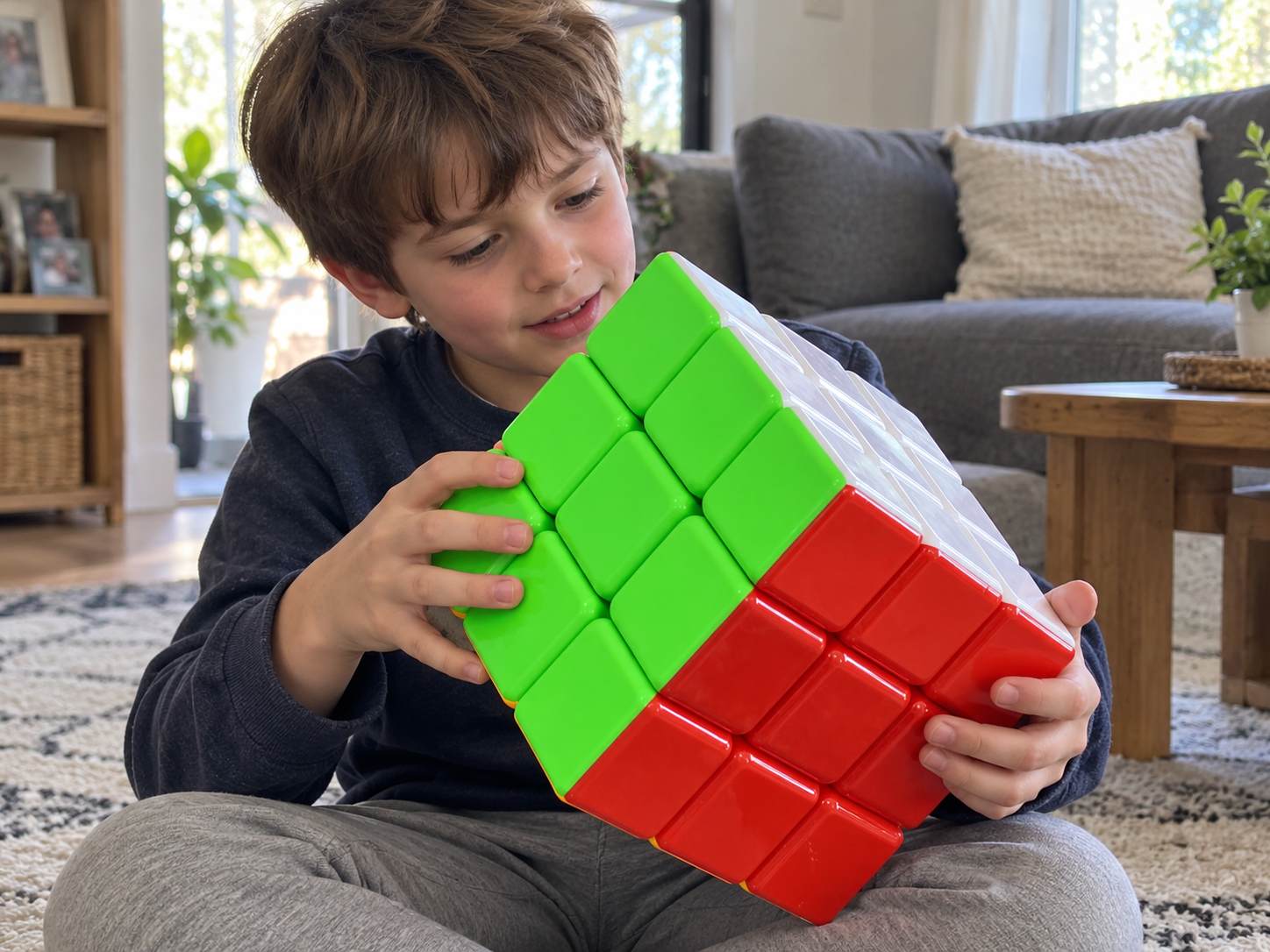
The Giant Magic Cube offers the recognizable challenge of a traditional 3×3 puzzle in a much larger format. At 18 cm, it is considerably bigger than a standard handheld cube, making the colored squares easy to see and giving children a large object to manipulate.
Its giant 18 cm (about 7.1-inch) format also makes it a standout gift. The oversized, colorful design creates an immediate wow moment when unwrapped and makes a familiar puzzle feel new. For a child who enjoys hands-on challenges, it can be a memorable birthday or holiday present rather than another toy that gets put aside after one use.
The cube is well suited to screen-free family fun, too. Parents and children can sit together, take turns rotating a face, or make a friendly challenge out of matching one row. Siblings can compare approaches and help each other spot patterns. Those shared moments give the puzzle value beyond practicing logic or geometry.
The main activity involves rotating sections of the cube until every face has a single color. Reaching that goal involves planning several moves ahead, recognizing how one rotation affects the surrounding pieces and remembering combinations that have already been attempted.
Children do not need to complete the entire puzzle to enjoy it. Younger beginners can start by creating a matching row or arranging one face. As their confidence improves, they can work toward solving the cube without assistance.
The large format also makes the puzzle suitable for shared activities. A parent can demonstrate one movement, ask the child to predict the result and then let them test their answer. Older children can work together to solve specific sections before attempting the full puzzle.
How It Helps With Math
A 3×3 cube is not an arithmetic teaching tool, but it gives children experience with ideas that appear in mathematics. They learn to recognize sequences, predict transformations and reason about the position of objects in three-dimensional space.
For example, a child can count the nine visible squares on one face and calculate how many face positions appear across all six sides. Another activity involves predicting where a colored corner will move after a quarter turn.
Such exercises connect physical movements with counting, geometry and logical reasoning without introducing a worksheet.
What We Like and What to Consider
The oversized design is the main attraction. It creates an engaging challenge for children who enjoy manipulating physical puzzles rather than solving problems on paper. The cube can also be used repeatedly, with new goals as solving skills improve.
Its large dimensions are a disadvantage for children who want a pocket-sized puzzle or plan to practice speed solving. Parents should also check the manufacturer age guidance and dimensions before purchasing, as the larger cube requires more room for handling.
For families interested in a large, reusable logic puzzle, find out more about this cube at https://www.amazon.com/gp/product/B09L77YZZQ
2. Rubik’s 2×2 Cube
| Type | 2×2 rotating puzzle cube |
| Configuration | Eight corner pieces |
| Best For | Beginners ready for a small color-matching challenge |
| Skills Practiced | Logical thinking, spatial reasoning and sequencing |
| Difficulty | Beginner to intermediate |
| Power Required | None |
Review
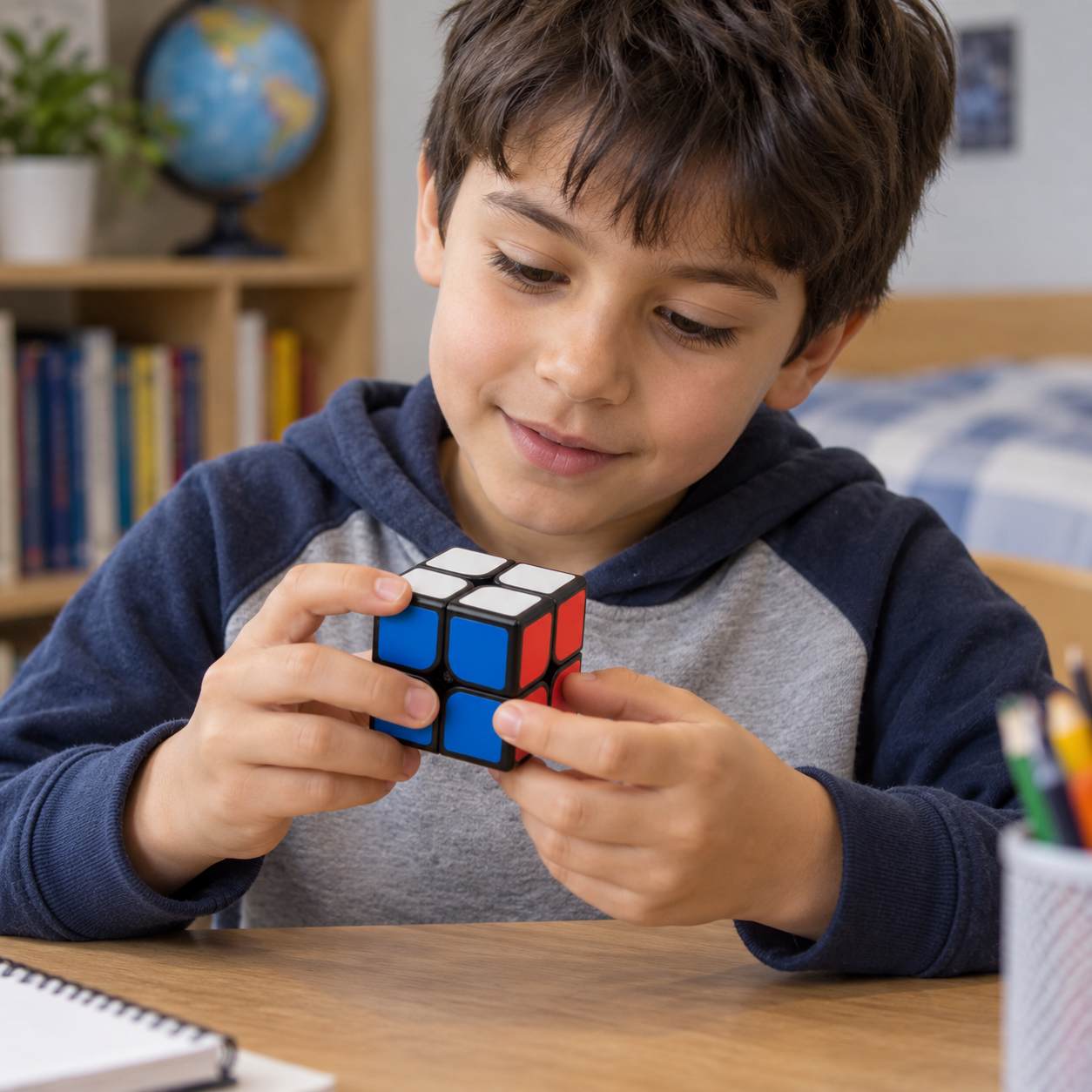
A 2×2 Rubik’s Cube offers a manageable introduction to rotating puzzles. Each face has four colored squares instead of nine, removing the edge and center pieces found on a traditional 3×3 model.
Children can quickly understand the goal of arranging each face into a single color. Solving it still takes planning, however, because a move that fixes one corner can disrupt pieces that were already in place.
The smaller puzzle is also suitable for short activities. Children can attempt one face, practice a sequence of turns or compete to solve a mixed cube using a method they have learned.
According to the official Rubik’s product description, the 2×2 cube has more than 3.6 million possible arrangements. Its limited number of pieces therefore does not make it a trivial puzzle.
How It Helps With Math
The 2×2 cube introduces children to spatial transformations and step-by-step reasoning. Every rotation changes the positions of several pieces, and children must recognize which movements bring them closer to the target arrangement.
Parents can turn the activity into a geometry lesson by asking children to identify quarter turns, half turns and full rotations. Children can also predict which squares will change positions before testing their answers.
What We Like and What to Consider
The reduced number of visible pieces makes the 2×2 easier to approach than a full 3×3 cube. It is portable, reusable and suitable for children who enjoy learning sequences through repetition.
The puzzle can still frustrate beginners who expect to solve every face through random turning. An introductory solving guide and patient practice make the experience more rewarding.
3. Learning Resources MathLink Cubes Brain Puzzle Challenge
| Type | Connecting cube puzzle activity set |
| Recommended Age | 5 years and older |
| Cube Count | 64 connecting cubes |
| Activities | More than 40 educational games |
| Skills Practiced | Early math, construction, logic and fine motor coordination |
| Power Required | None |
Review
The MathLink Cubes Brain Puzzle Challenge takes a different approach to puzzle solving. Instead of rotating one fixed cube, children connect individual pieces to complete building activities and solve challenges.
The set includes 64 colorful connecting cubes and activities designed for children aged five and older. The manufacturer describes more than 40 games covering early math, reasoning and construction skills.
A child can start by following a simple arrangement, then move to a more demanding challenge that requires planning the placement of individual cubes. The physical pieces allow children to test ideas, take structures apart and rebuild them without needing to erase a mistake.
The activity format also makes the set suitable for playing with another child. Partners can compare their solutions or work together to complete a construction challenge.
How It Helps With Math
Connecting cubes give children a physical way to explore quantities and shapes. When a child joins four cubes and then adds three more, the completed structure demonstrates the addition problem 4 + 3 = 7.
Building three-dimensional structures introduces another set of skills. Children can count the number of cubes used, compare arrangements and determine how many additional pieces are needed to finish a design.
The activities also encourage children to break a larger task into smaller steps, a skill they can apply when solving multistep math problems.
What We Like and What to Consider
The combination of construction and guided activities gives the set more variety than a single rotating puzzle. Children can work on early arithmetic one day and a spatial reasoning challenge the next.
Some activities require children to follow instructions carefully, so younger players may appreciate assistance at first. The individual pieces also need storage to prevent them from getting lost.
4. Rubik’s 3×3 Cube
| Type | Classic rotating puzzle cube |
| Configuration | 3×3 squares on each face |
| Best For | Children ready for more advanced puzzle solving |
| Skills Practiced | Sequencing, spatial reasoning, memory and planning |
| Difficulty | Intermediate to advanced |
| Power Required | None |
Review
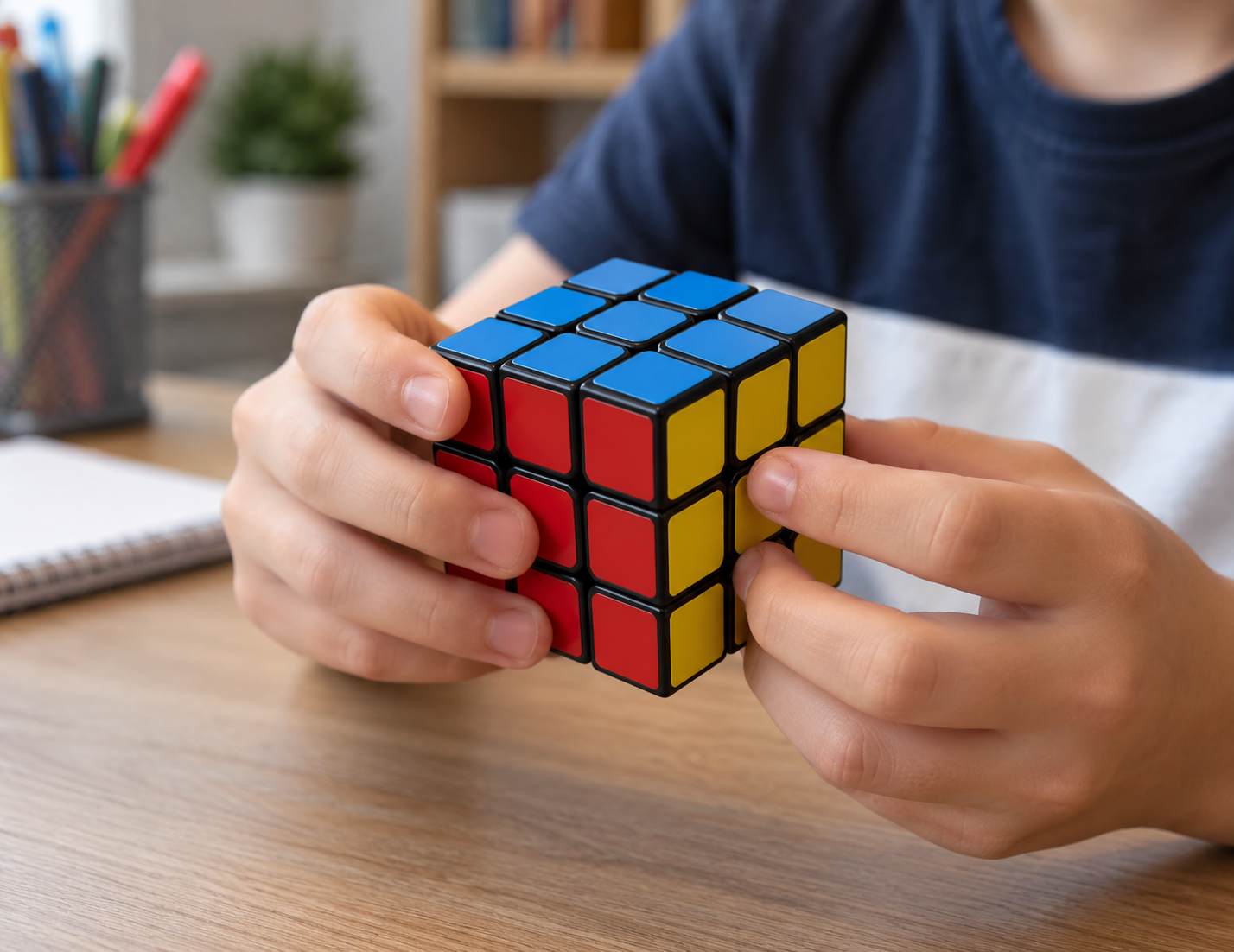
The classic Rubik’s 3×3 Cube remains an engaging challenge for children who enjoy working toward a difficult but achievable goal. Each of its six faces contains nine colored squares, and the objective is to restore one solid color to every face.
Unlike simple matching games, the cube requires children to consider the effect of each movement on several pieces at once. Random turning may create an occasional matching row, but completing the puzzle consistently involves learning a reliable method.
Children who already know how to solve a 2×2 cube may enjoy advancing to the larger puzzle. They can learn to complete one layer, position the middle edges and then tackle the final layer.
A full solution is not necessary on the first day. Progress can be measured through smaller achievements, such as solving one cross or learning a new sequence of moves.
How It Helps With Math
The 3×3 cube gives children experience with algorithms, which are sequences of steps used to reach a particular result. A solving method requires children to perform movements in a specified order and observe how the arrangement changes.
It also creates opportunities to explore geometry. Parents can introduce clockwise and counterclockwise rotations, identify corners and edges, and discuss how a cube has six faces, twelve edges and eight corners.
For children who enjoy mathematical challenges, the cube can provide a reason to investigate combinations and the number of possible arrangements.
What We Like and What to Consider
The classic cube has plenty of replay value. Children can continue practicing after their first successful solution, trying to improve accuracy, remember longer sequences or finish without written instructions.
Learning the solution takes time, and the difficulty may discourage children who have never used a rotating puzzle. A 2×2 cube may be a more suitable starting point for younger beginners.
5. Learning Resources MathLink Cubes PreK Activity Set
| Type | Connecting math cubes with activity cards |
| Recommended Age | 3 years and older |
| Cube Count | 100 connecting cubes |
| Activity Cards | 15 double-sided cards |
| Skills Practiced | Counting, sorting, addition, subtraction and shape building |
| Power Required | None |
Review
View this post on Instagram
The MathLink Cubes PreK Activity Set is designed for younger children who are beginning to connect numbers with physical quantities. Its colorful cubes snap together, allowing children to build groups, towers and simple three-dimensional shapes.
The official product information lists 100 cubes in ten colors and 15 double-sided activity cards. The activities cover counting, sorting, sequencing and early arithmetic.
One simple game involves giving a child ten cubes and asking them to build two towers with equal numbers of pieces. Another challenge is to arrange a repeating sequence of colors and identify which cube should come next.
Children can also use the cubes for free construction, creating objects and then counting how many pieces they used. There is no requirement to follow the activity cards for every play session.
How It Helps With Math
Young children learn arithmetic more easily when they can connect a written number with a visible quantity. A row of five cubes gives the number five a physical representation, rather than leaving it as a symbol on paper.
For subtraction, a child can build a tower of eight cubes, remove three and count the five remaining pieces. Building groups of equal size can later introduce the idea of multiplication.
The colored pieces also support sorting and early sequencing exercises. Children can create repeating color arrangements, compare the lengths of towers and explore which structures use more or fewer pieces.
What We Like and What to Consider
The set provides a direct connection to preschool and elementary math lessons, particularly counting and early arithmetic. The activity cards give parents a starting point, and the cubes remain useful for free play and more advanced calculations.
Individual pieces require supervision and organized storage. The manufacturer warns that the set contains small parts and is unsuitable for children under three years old.
How to Choose the Right Puzzle Cube for Your Child?
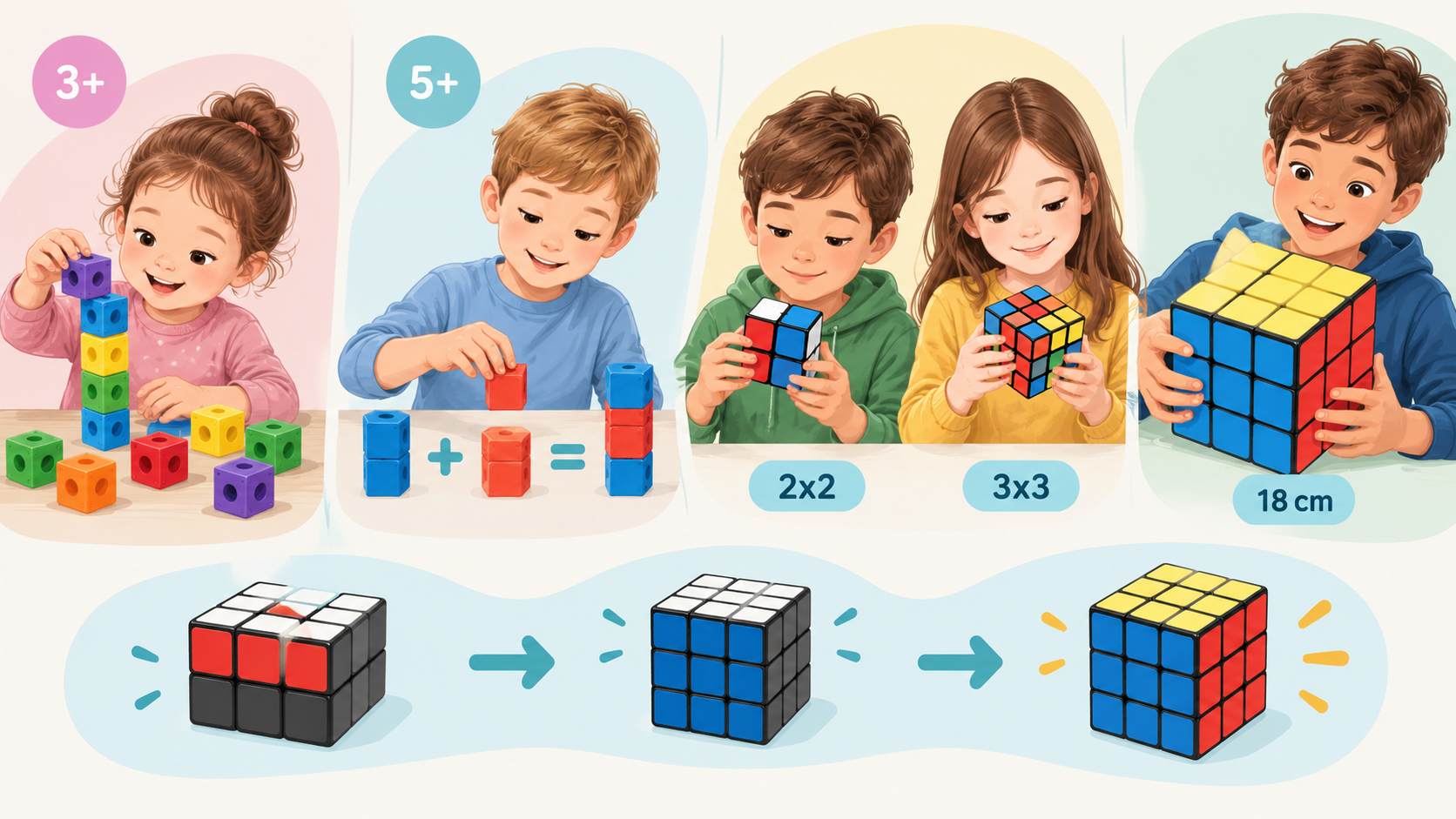
The age of the child is an important starting point, but previous experience with puzzles also influences which toy will be enjoyable. A child who loves building structures may prefer connecting cubes, whereas a child who enjoys completing challenges independently may be more interested in a rotating color puzzle.
For preschool children, connecting cubes are useful because they introduce mathematical ideas through visible quantities. Early elementary students can use them to explore arithmetic and geometric structures before moving toward abstract exercises.
Older children who enjoy logic games may prefer the Rubik’s 2×2 or 3×3 cube. The oversized Giant Magic Cube offers a larger version of the traditional challenge, particularly suited to children who enjoy handling substantial physical puzzles.
Parents should also consider frustration levels. A toy that is too difficult may be abandoned before the child learns anything useful. Giving children small, achievable goals encourages them to continue experimenting and gradually tackle more demanding puzzles.
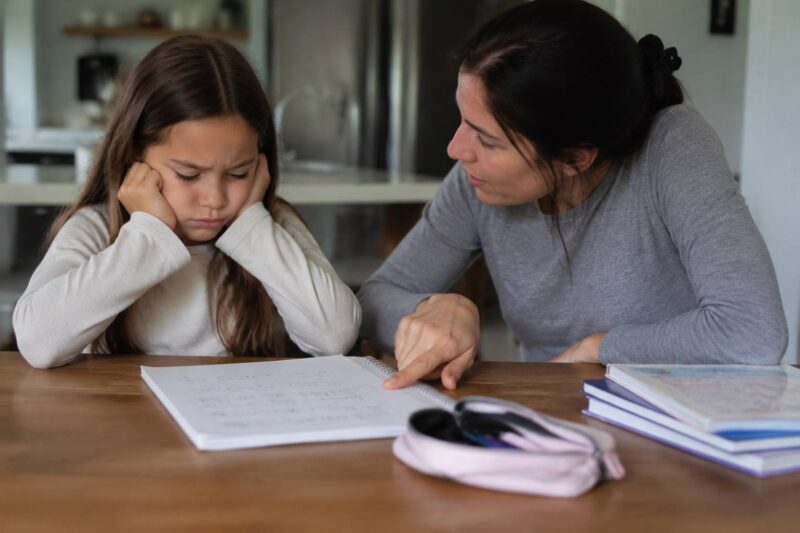
If your child already finds mathematics stressful, our guide on what to do when a child refuses math explains how to reduce pressure and make learning activities less intimidating.
The Bottom Line
A puzzle cube becomes more educational when children have opportunities to explain their reasoning. Instead of immediately showing the next move, ask them to predict what will happen after rotating a face or adding another cube to a structure.
With a rotating cube, parents can introduce counting, geometry and step-by-step planning. With connecting cubes, children can model addition, subtraction and equal groups using real objects.
Short sessions are usually enough to introduce a new challenge. Allow children to repeat tasks they enjoy, experiment with their own ideas and return to more difficult puzzles after a break.
The goal is not to turn every game into a formal lesson. Children gain experience with mathematical thinking when they have a clear challenge, enough freedom to experiment and the opportunity to discover why a solution works.