
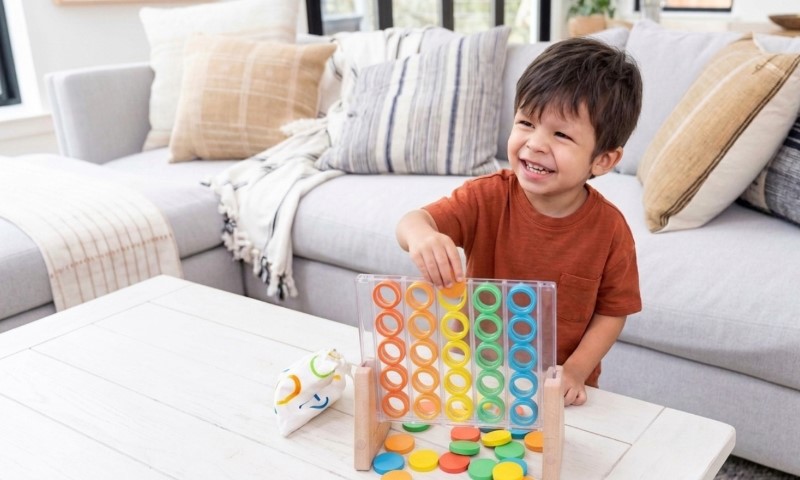
Logic and creativity both play a major role in how children learn, communicate, and solve problems.
Logic helps children observe details, put steps in order, notice patterns, make predictions, and work through problems one step at a time..
Creativity gives children room to imagine, experiment, express ideas, and try new solutions.
A child who invents a story, builds a tower, paints with unusual materials, or turns a box into a spaceship is practicing flexible thinking, not just playing.
Hands-on activities are one of the easiest ways to develop both skills at once. Screen-free play, storytelling, art, nature, building, and daily routines give children real objects to touch, move, sort, test, change, and explain.
Kids learn best when they can use their hands, ask questions, make mistakes, and try again.
Use Everyday Activities to Build Logic
Daily routines can become simple thinking practice without feeling like a lesson.
Young children do not need formal worksheets to build logic.
Ordinary household tasks can teach sorting, sequencing, comparing, predicting, and problem-solving.
A child can sort socks by color, size, or pattern while laundry is being folded. Bowls can be stacked by size before dinner.
A table can be set in a repeating pattern with plates, cups, and napkins. Toys can be grouped by type, color, shape, or use before they are put away.
Useful household activities include:
- Sorting buttons, spoons, fruit, blocks, or toys by shape, color, size, or texture
- Following a morning or bedtime picture sequence
- Matching lids to containers
- Arranging shoes by size
- Putting books on a shelf by height or topic
- Grouping stuffed animals by type, color, or size
Activities like these help children classify objects, notice patterns, follow steps, and become more independent.
A bedtime routine, for example, can teach order and prediction when a child knows pajamas come before brushing teeth, brushing teeth comes before a story, and a story comes before sleep.
Logic can also grow during small waiting moments. In a waiting room, a parent can ask a child to find three round objects, name something soft, or guess what might happen next in a picture book.
Mealtimes, getting dressed, cleaning up, and simple errands all give children chances to think, compare, and explain.
Encourage Open-Ended Creative Play
Open-ended play gives children materials without strict instructions. Instead of telling a child exactly what to make, adults can offer simple supplies and let the child decide what happens next.
Good materials for open-ended play include:
- Cardboard boxes
- Blocks
- Fabric scraps
- Recycled materials
- Paint, markers, clay, and collage supplies
- Old clothes, bedsheets, and household props
Parents can also add a more guided option, such as Davincified paint by numbers, when children want a hands-on art activity that builds patience, color recognition, focus, and step-by-step thinking.
A cardboard box can become a spaceship, castle, secret hideout, skyscraper, shopping mall, robot, or submarine.
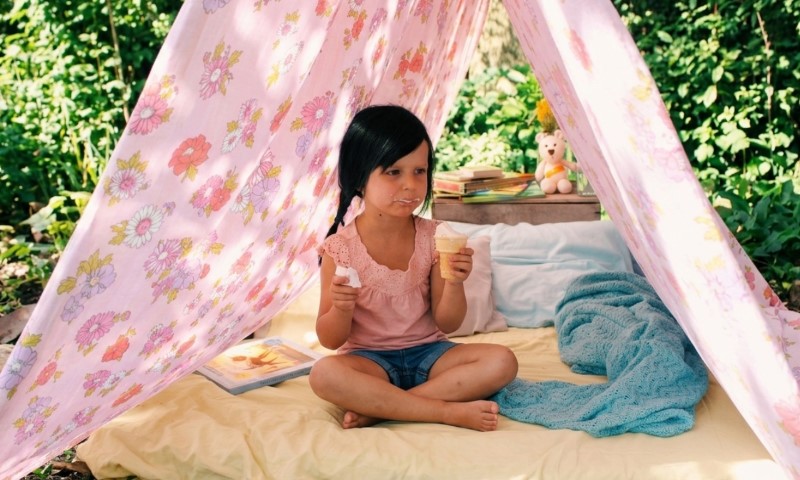
A bedsheet can become a tent, cape, pond, curtain, costume, or stage. Blocks can become a city one day and an animal shelter the next.
Open-ended play builds imagination because children have to make choices. It also builds confidence because there is no single correct result.
A child can test an idea, change it, add to it, or start again without feeling like they failed.
Process matters more than a perfect final product.
When adults praise effort, creative choices, problem-solving, and persistence, children learn that mistakes are part of making something new.
Questions such as “What are you building?” or “What could you add next?” give support without taking over.
Combine Logic and Creativity With Building Challenges
Building challenges are a strong way to connect logical thinking with creative design.
A child has to plan, test, adjust, and imagine at the same time.
Simple design tasks can include:
- Build a bridge for toy cars
- Make a tower that stands on its own
- Create a house for a stuffed animal
- Build a futuristic city
- Design a future vehicle or mode of transportation
- Create something using only five materials
Low-cost supplies work well for these activities.
Cardboard packaging, plastic containers, blocks, LEGO, craft sticks, leaves, rocks, paper tubes, tape, string, and safe household items can all become building materials.
A bridge challenge teaches children to think about weight, balance, width, and support. A tower challenge teaches height, stability, and testing. A stuffed animal house teaches size, comfort, entry points, and design.
A future vehicle activity encourages imagination while still asking children to think about movement, passengers, wheels, wings, or safety.
Limits can make the activity more creative.
Asking a child to build with only five materials, only recycled items, or only objects found at home pushes them to visualize options and solve problems without waiting for perfect supplies.
Less structure can also lower pressure because there is no one correct answer.
Use Art, Storytelling, and Role-Play
Art, storytelling, and role-play help children connect imagination with order, memory, language, and problem-solving.
Art helps children test materials, compare textures, make choices, and express ideas.
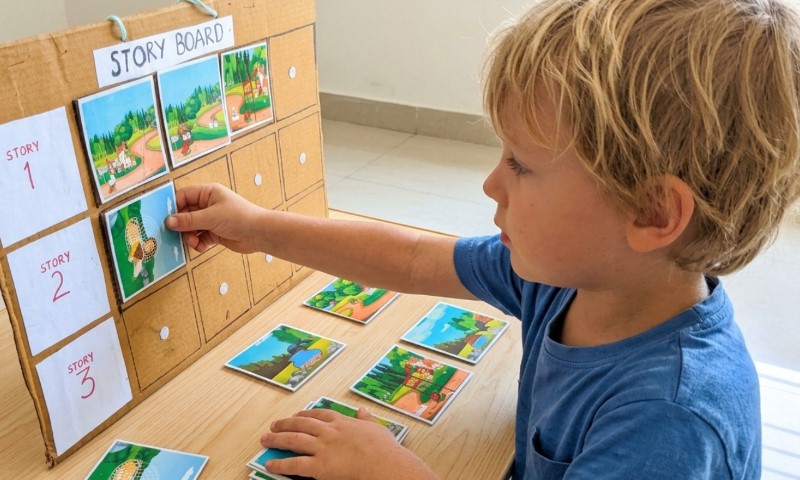
Storytelling helps children practice sequence, cause and effect, memory, and prediction.
Role-play helps children think about other people, solve pretend problems, use language, and express feelings.
Hands-on ideas include:
- Make a story with puppets
- Draw a new invention
- Act out a problem and solution
- Create art using random materials
- Use dress-up clothes and props to invent characters
- Turn a bedsheet into a cape, pond, tent, or costume piece
- Create a sound story using wooden spoons, empty containers, paper, or bubble wrap
- Try a 30-circle challenge, where children turn empty circles into different objects
Open-ended art sessions work best when children can choose paints, markers, pastels, paper, fabric, glue, clay, collage scraps, or safe recycled items.
Children can mix materials, make mistakes, discover new techniques, and change their plans as they work.
Mystery material art can add a useful challenge.
Give children random items such as cotton balls, rubber bands, coffee filters, bottle caps, paper clips, tissue paper, or fabric pieces.
Then ask them to create something around a simple theme, such as animals, weather, homes, space, or inventions.
Constraints help children think in new ways because they must decide how to use materials that may not match their first idea.
Storytelling can also happen through drawing, acting, toys, music, movement, and pretend play.
A child can draw a character, act out what happens next, use toys to solve a problem, or make sounds for rain, footsteps, doors, animals, or machines.
Activities like these help children connect ideas while practicing order and imagination.
Explore Nature Through Hands-On Learning
View this post on Instagram
Outdoor play gives children space to observe, compare, collect, build, and imagine.
Nature works like a quiet learning lab because children can touch real objects, notice patterns, and ask questions about what they see.
Simple nature activities include:
- Sort leaves by shape, size, or color
- Build with sticks, rocks, mud, or pinecones
- Go on a scavenger hunt
- Make nature art
- Observe insects, flowers, clouds, water, or rocks
- Create stories about animals or creatures seen outdoors
A child sorting leaves is practicing classification and comparison. A child watching clouds is practicing observation and imagination.
A child building with sticks and rocks is learning balance, texture, weight, and structure. A child watching insects can make predictions about movement, food, shelter, and behavior.
Scavenger hunts are especially useful because they combine movement with thinking.
Children can look for something smooth, something rough, something tiny, something taller than their hand, something that smells fresh, or something shaped like a circle.
Nature art also gives children creative freedom. Leaves can become animal ears, sticks can become roads, stones can become faces, and flower petals can become patterns.
Outdoor materials invite children to create without needing expensive supplies.
Ask Better Questions
Adult questions can turn simple play into stronger thinking. Instead of giving quick answers, adults can ask open-ended questions that help children explain, predict, compare, and solve problems.
Helpful questions include:
- “What do you notice?”
- “What could happen next?”
- “Why did you choose that?”
- “How can you solve this another way?”
- “What if our dinner was outside tonight?”
- “How could we brush our teeth without water?”
- “What do you think the character will do next?”
- “Why do you think that happened?”
Questions like these help children slow down and think. A child building a tower may notice that a wide base works better than a narrow one.
A child listening to a story may predict what a character will do next. A child solving a pretend problem may come up with more than one answer.
Playful questioning also works through riddles, 20 Questions, story predictions, shape hunts, texture hunts, and “what if” situations.
A parent might ask, “What if our shoes could talk?” or “How could we carry water without a cup?” Questions like these build reasoning and imagination at the same time.
Praise should focus on effort, testing, and creative thinking.
Comments such as “You tried a new way,” “You noticed the tower was leaning,” or “You changed your plan when it did not work” help children value learning over perfection.
Closing Thoughts
Hands-on activities help children build logic and creativity at the same time.
Simple routines, household objects, recycled materials, art supplies, nature items, music, movement, and storytelling can all become learning tools.
Expensive toys and screens are not necessary.
A cardboard box, a pile of leaves, a set of blocks, a spoon, a bedsheet, or a handful of buttons can give children chances to sort, build, imagine, test, compare, and explain.