


Yes, zero space is not just “nothing” or a space. In math, zero is a real number with its own role and rules. It represents “nothing” in terms of quantity, but it is still something in terms of math. Without zero, modern math would not work; we could not write large numbers properly, solve equations, use decimals, or even do everyday things like measuring temperatures below freezing.
Zero matters because it works both as a placeholder (in numbers like 101, where it shows that there are no tens) and as a value (0 apples means you have none). For kids learning math, zero can feel confusing, but once you understand what it does, you see that it is one of the most important inventions in human history.
Where Did Zero Come From?
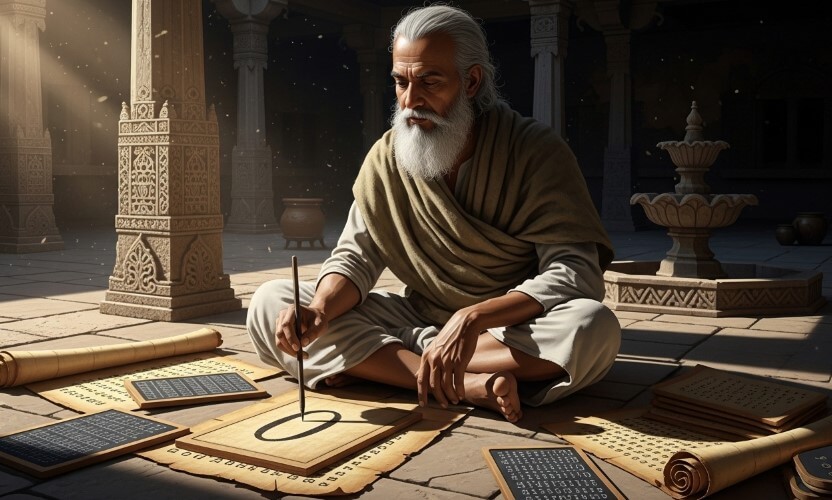
Zero wasn’t always part of math. Ancient number systems like Roman numerals had no zero. That’s why writing and calculating big numbers were hard. For example, in Roman numerals, the number 204 is written as CCIV. There’s no simple way to show “nothing” in the tens place.
The idea of zero was first used in ancient India more than 1,500 years ago. The mathematician Brahmagupta wrote rules for how zero works in addition and subtraction. Later, the concept traveled to the Islamic world and then to Europe, where it finally became part of modern math.
What Does Zero Mean in Math?
Zero can mean different things depending on where it is used:
- As a number itself: 0 shows you have nothing of something. If you have 0 cookies, your plate is empty.
- As a placeholder: In 102, the zero shows there are no tens. Without zero, we would not know if the number is 12, 102, or 1,002.
- On a number line: Zero sits in the middle, between negative numbers (−1, −2, 3…) and positive numbers (1, 2, 3…). It is the “starting point.”
- In equations, zero plays a big role. For example, solving x + 5 = 5 means x = 0.
- In real life, Temperatures, bank accounts, and even sports scores use zero to mean “none.”
Zero in Addition and Subtraction

Zero is special because it doesn’t change numbers in addition:
- 5 + 0 = 5
- 0 + 12 = 12
This is called the additive identity: adding zero to a number leaves it the same.
In subtraction, zero shows absence:
- 8 − 8 = 0 (if you eat 8 candies from a pile of 8, you have none left).
- 10 − 0 = 10 (taking away nothing means it stays the same).
Zero in Multiplication and Division
Zero behaves differently in multiplication:
- Any number times 0 = 0.
If you have 0 baskets of apples, even if each basket could hold 100 apples, you still have 0 apples.
But division is trickier:
- You can divide 0 by a number (0 ÷ 5 = 0).
- But you cannot divide by zero (5 ÷ 0 is undefined). Why? Because dividing into “zero groups” doesn’t make sense, you can’t share something among no groups.
This is one of the first “math mysteries” kids bump into, and it shows why zero is powerful but also needs rules.
Zero on the Number Line
Imagine a straight line with numbers: negative on the left, positive on the right. Zero sits right in the center.
- It separates positive and negative
- It is the point where something begins or balances out.
- Temperatures use zero as the dividing line between freezing and above-freezing.
- Bank accounts use zero as the line between having money and being in debt.
Zero is like the referee in the middle of a game; it marks the balance point.
Real-Life Examples Kids Can Understand
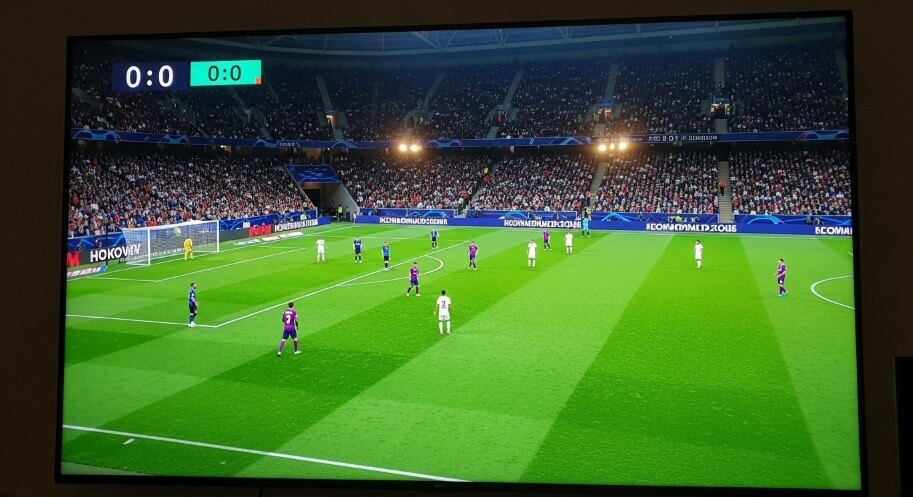
1. Sports
Zero is everywhere in sports. In soccer, if the scoreboard shows 0–0, it means neither team has scored yet. Zero tells players and fans that the game is still tied. In basketball, if a player has 0 points, it means they haven’t made a basket. Even in tennis, the word “love” actually means zero. Without zero, keeping score would be impossible; you wouldn’t know when the game is just starting or when a team hasn’t scored.
2. Money
Zero plays a big role in money. Imagine you have $10 for an allowance and spend it all on snacks. When you look back in your wallet, you now have $0. Zero tells you exactly how much is left: nothing. It also matters in bigger ways. If your savings account falls to zero, you know you can’t buy anything else. Zero helps us track money clearly, whether we’re counting coins in a piggy bank or checking a bank account online.
3. Temperature
Thermometers use zero as an important marker. In the Celsius system, 0°C means the freezing point, the temperature at which water turns to ice. If the weather report says it’s 5°C, that means it’s colder than freezing. In Fahrenheit, zero has a different spot, but it still shows extremely cold conditions. Zero gives us a reference point, a way to say “here’s the line between cold and very cold.” Without zero, we couldn’t describe how temperatures change below freezing.
4. Digital Devices
Every computer, smartphone, or video game you use depends on zero. Computers “think” in a special language called binary code, which is made up of only two symbols: 0 and 1. These zeros and ones work like switches; 0 means “off,” and 1 means “on.” Together, they control everything from opening an app to watching a video or playing a game. Without zero, computers would have no way to process information. In fact, the entire digital world is built on the idea that zero is just as important as one.
5. Place Value
Zero is what makes our number system work. Compare 15 and 105. The zero in 105 shows there are no tens in that number. Without it, we might confuse 105 with 15 or 1005. Zero is a placeholder; it keeps numbers in the right position so we can tell the difference between hundreds, tens, and ones. If you’ve ever lined up numbers to do addition or multiplication, you’ve already seen how zeros keep math organized.
Why Zero Matters in Learning Math
@superteacherguy I don’t understand why saying these zeros do not matter persists. Please help me understand why teachers say that. #elementarymath #mathteacher #teachertok #decimals #placevalue
For kids, learning zero is tricky at first. Counting usually starts with 1, one apple, two apples, three apples. But zero is different because it means none.
Still, without zero:
- You couldn’t write big numbers.
- You couldn’t work with negatives.
- Equations would be incomplete.
- Computers and technology would not work.
Zero is the foundation for modern math, science, and even everyday life.
Table: Zero’s Different Roles
Fun Activities for Kids to Learn Zero
- Zero Hunt: Count objects in a room, then look for something you have 0 of (like 0 balloons if none are there).
- Number Line Game: Draw a big number line on the floor with tape. Stand on zero, then jump forward and backward.
- Sports Examples: Watch a soccer game. Keep track of when the score is 0, then when it changes.
- Money Practice: Play store with pretend money. Show what happens when you spend it all (balance = 0).
- Temperature Watch: Look at weather forecasts and see when the temperature is below, at, or above zero.
Why Zero Is a Big Idea in Math
Mathematicians say zero was one of the greatest inventions in history. It is not just an empty circle; it is a way to describe, measure, and calculate.
- It makes the place value system possible.
- It allows negative numbers and algebra to work.
- It creates the foundation for computers and digital technology.
- It shows balance points in science, physics, and economics.
Conclusion
So, is zero a number? Yes, zero is absolutely a number. It means “nothing,” but in math, it is something, a number with its own rules. It works as a placeholder, as a value, and as the center point between negatives and positives.
For kids, learning about zero is like unlocking a secret key to math. Without zero, you couldn’t count properly, write big numbers, use computers, measure temperatures, or even keep score in sports. Zero may look simple, but it is one of the most important numbers in the world.