
Math can spark huge smiles when we mix it with engaging board games. I’ve spent years trying out different options with students, my own kids, and even friends who wanted to sharpen their skills.
Some games are quick and lively, while others are more immersive. In this blog post, I’ll share my personal take on 15 great math-themed board games that bring numbers, strategy, and good times together in one neat package.
I won’t stretch the intro too much—let’s just say I’ve seen how numbers turn from dreaded to downright fascinating once kids roll dice and shuffle cards. It’s all about game-based learning, and I’ve got plenty to pass along. Let’s jump right in.
1. Prime Climb
Prime Climb has this stunning color wheel board that goes from 0 to 101. It looks awesome on the table, with bright shades that hint at prime numbers.
You roll two dice, then pick multiplication, addition, subtraction, or division to move your pawns.
The main draw is how it encourages creative moves as you aim for those prime spots. I’ve noticed it helps kids pick up arithmetic patterns fast because they need to plan a few moves ahead.
-
- Ideal age range: Approximately 10+
- Skills targeted: Multiplication, division, prime number recognition
- Play time: Around 20–30 minutes
- Personal tip: Have everyone announce what they’re doing with each roll, so others pick up new strategies.
2. Sum Swamp
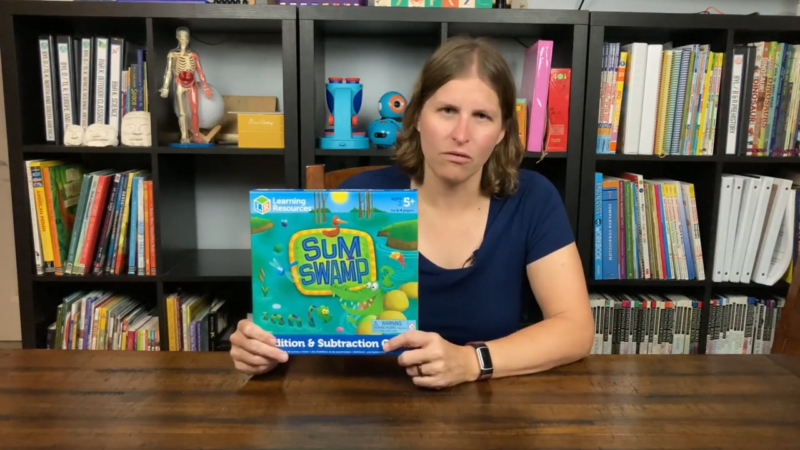
Sum Swamp is a staple in many early elementary classrooms. The board looks like a whimsical swamp, complete with an alligator and a few cheeky creatures lurking around.
Kids roll the dice, then add or subtract the numbers to move along the path. It’s simple but effective for reinforcing quick math facts.
I’ve found children who might otherwise avoid practicing addition facts are more than happy to do so when they’re hopping through a “swamp.”
- Ideal age range: Around 5–7
- Skills targeted: Basic addition and subtraction, even/odd numbers
- Play time: Roughly 15–20 minutes
- Personal tip: Sometimes, I let kids add silly sound effects or dramatize the swamp “challenges,” which keeps the energy high.
3. Money Bags
Money Bags centers on counting coins, making change, and exploring currency. Moving around the board, players collect coins and figure out how to trade them in for larger denominations.
I love how it brings real-world scenarios to the table. Kids start seeing value in pennies, nickels, dimes, and quarters in an interactive way.
- Ideal age range: Around 6–9
- Skills targeted: Money counting, change-making, coin recognition
- Play time: 15–25 minutes
- Personal tip: Toss in some real coins (if you can supervise) to make the experience even more tangible.
4. Equate
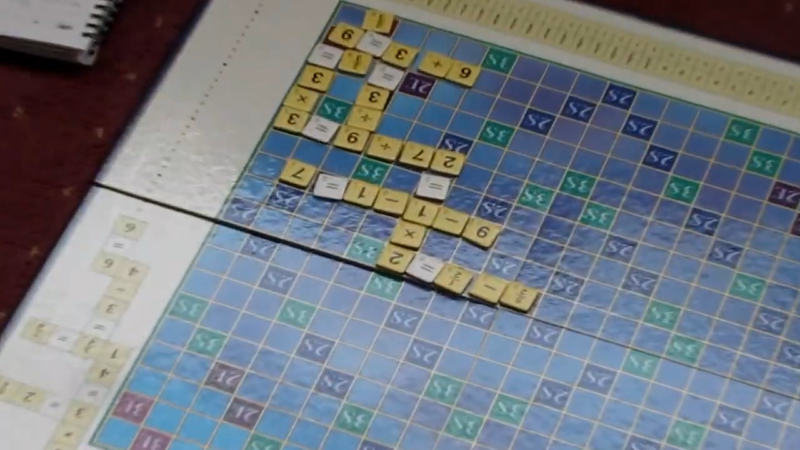
Equate is one of those games that can adapt to different skill levels because you can choose how complex you want the math to be. It comes with tiles featuring numbers and mathematical symbols.
You create crosswords of equations on the board. If you’re with a younger crowd, maybe stick to basic addition and subtraction.
- Ideal age range: 8+ (can be tweaked for different levels)
- Skills targeted: Arithmetic, algebraic thinking, strategic tile placement
- Play time: 30+ minutes, depending on how deep players go
- Personal tip: Keep a pencil and paper handy. Sometimes you’ll want to double-check an equation before placing it on the board.
5. Math Dice
Math Dice is small, portable, and perfect for those quick bursts of practice. You start by rolling two 12-sided dice to set a target number.
Then you roll three more dice and try to use them (through any operations you choose) to match that target. It’s speedy, and it encourages flexible arithmetic thinking.
- Ideal age range: 8+
- Skills targeted: Creative math operations, mental arithmetic agility
- Play time: 10–15 minutes
- Personal tip: You can keep track of how many unique solutions you find for the same target—it can become a mini-challenge within the game.
6. Blokus
Blokus isn’t all about numbers, but geometry enthusiasts will appreciate its focus on shapes, angles, and planning.
You place your colored pieces on the board, aiming to cover as much area as possible while limiting your opponents’ space. It introduces the idea of perimeter and area in a subtle, playful way.
- Ideal age range: 7+
- Skills targeted: Spatial awareness, planning, light geometry concepts
- Play time: 20–30 minutes
- Personal tip: If you spot a younger child struggling, encourage them to rotate pieces freely in their hand to see how they might fit. Sometimes they need that physical movement to spot a solution.
7. KenKen
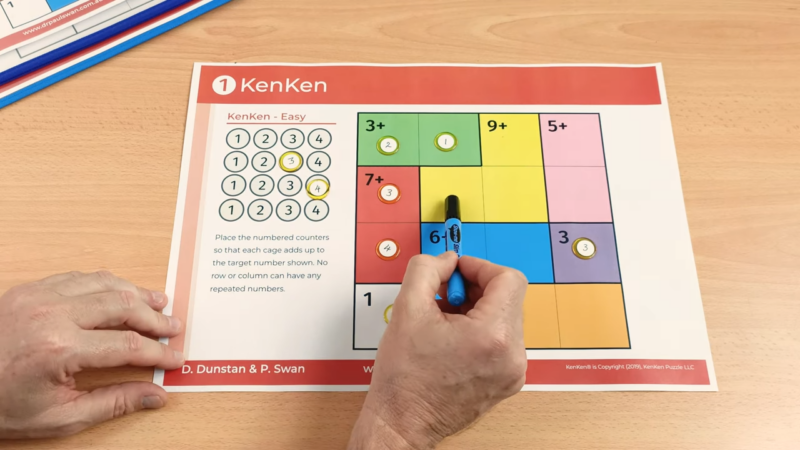
You’re filling in a grid where each row and column can’t repeat numbers. On top of that, groups of squares (cages) have arithmetic clues.
It’s reminiscent of Sudoku, but with an added layer of calculation. I’ve introduced KenKen puzzles in a classroom setting for group work.
- Ideal age range: 9+
- Skills targeted: Arithmetic, logic, pattern recognition
- Play time: Depends on puzzle size (small grids can be done in 5–10 minutes)
- Personal tip: If you’re playing with multiple learners, consider printing different puzzle sizes to accommodate each person’s comfort level.
8. Damath
@romeobetonio3 Guidelines in Playing Damath Part 1 #guidelinesinplayingdamath #damath #howtoplaydamath #damathboardgame #fyp #foryou #foryourpage #fypspotted
Damath originated in the Philippines and combines checker-like movement with math-based captures. Each checker piece has a numerical value, so when you capture an opponent’s piece, you carry out a math operation.
It’s a cool twist because you can’t just randomly jump another piece; you have to factor in the operation that goes along with it.
- Ideal age range: 8+
- Skills targeted: Arithmetic, strategic movement, reasoning
- Play time: Varies, similar to checkers (15–30 minutes)
- Personal tip: Try making custom boards with different operations. Maybe double the point value of certain pieces to add a bit of excitement.
9. Zoombinis
Zoombinis (often seen in digital form as well) challenges players to guide little creatures through a series of puzzles that require pattern recognition and strategic decisions.
They have different attributes like hair style, eye type, and footwear. You’ll test patterns, sequences, and classification skills on each puzzle. The board game version, or a hybrid tabletop/computer approach, can be a hoot.
- Ideal age range: 7+
- Skills targeted: Pattern recognition, problem-solving, logical deduction
- Play time: 30 minutes to an hour, depending on the puzzle layout
- Personal tip: Encourage kids to verbalize why they think a certain pattern is correct or incorrect. It helps them see what’s going on in each puzzle step.
10. Adsumudi Math Game
Adsumudi presents you with a target number on a card, and you use the smaller numbers on the card to reach that target.
You might add, subtract, multiply, or divide to get to the goal. One card can have multiple solution paths, so players start exploring creative ways to combine numbers.
- Ideal age range: 8+
- Skills targeted: Arithmetic fluency, problem-solving, adaptability
- Play time: 10–20 minutes
- Personal tip: Set a timer to raise the stakes—who can spot the correct combination first?
11. Tiny Polka Dot
@janeparkang I dusted off these #TinyPolkaDot math cards to play some fun math fact fluency games with my third grader. It’s a great way to brush up on basics after she works really hard on her daily homework #mathfactfluency
Tiny Polka Dot is designed for small children discovering numbers for the first time. The set of cards is bursting with color and includes all sorts of mini games you can play.
You might do a matching game where kids pair dot patterns with numerals, or you might try a simple addition contest. It’s casual, warm, and welcoming for young learners.
- Ideal age range: 3–7
- Skills targeted: Counting, early arithmetic, basic pattern recognition
- Play time: 5–15 minutes per mini game
- Personal tip: Rotate through different mini games to keep it fresh. It grows with the child’s math level.
12. Proof! Math Game
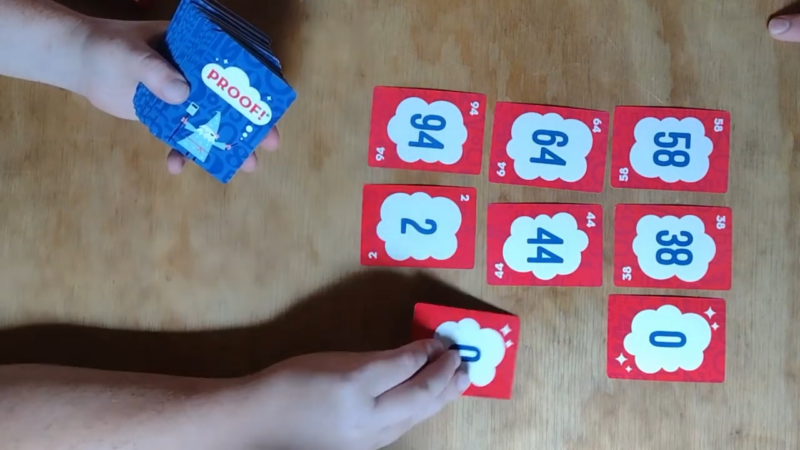
Proof! lays out a bunch of number cards. Players race to spot equations (3-card, 4-card, even 5-card combos) that make sense.
For example, if you see 2, 3, 6, you might claim 2×3 = 6. There’s a direct approach to mental math here, which can heighten players’ speed and precision over time.
- Ideal age range: 9+
- Skills targeted: Equation building, rapid calculation, pattern finding
- Play time: 10–20 minutes
- Personal tip: If everyone is new, allow a few seconds before pouncing on a combination, so each person has a fair shot at spotting something.
13. Math Fluxx
Fluxx is known for rules that shift constantly—every card you play can alter how you win or what you can do. Math Fluxx keeps the same structure but ties in number-based goals and actions.
- Ideal age range: 8+
- Skills targeted: Quick adaptation, basic arithmetic, strategic thinking
- Play time: 15–30 minutes
- Personal tip: To keep the frantic nature manageable, I often do a “practice hand” so new players see how the rules morph.
14. Sushi Go!
Sushi Go! is a drafting game where you pick a sushi card from your hand, then pass the rest around. Points come from combos of various sushi types.
On the surface, it’s all about collecting sets, but behind that is a gentle nudge toward probability, tallying, and strategic choices.
- Ideal age range: 8+
- Skills targeted: Probability, counting, pattern creation
- Play time: 15–20 minutes
- Personal tip: Use it as a stepping stone into more advanced card-drafting games, which often feature more intricate math behind the scenes.
Also read: 9 Fun Math Games Inspired by Real Sports That Teach Numbers, Angles, and More
15. Math for Love Tiny Polka Dot
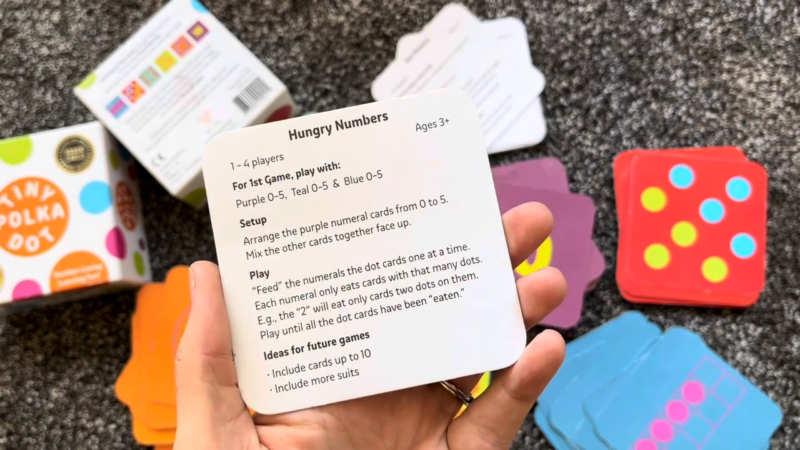
There’s also a Math for Love version that goes by a similar name—Tiny Polka Dot.
I’ve found it very helpful for kids who are just beginning to explore counting, matching, and basic arithmetic.
- Ideal age range: 3–7
- Skills targeted: Counting, addition, pattern recognition
- Play time: 5–15 minutes
- Personal tip: Combine these cards with small manipulatives (like blocks) to give tactile learners extra layers of practice.
Wrapping Up
Math-focused board games can break down barriers that textbooks alone sometimes create. They fill the gap by transforming rote exercises into memorable adventures. I’ve witnessed kids shouting with joy over completing an equation or proudly making correct change. It’s that spark that keeps us, as educators and parents, searching for fresh ways to mix math with fun.
Each game above offers its own spin, so consider your learners’ interests and pick one (or a few) that fits best. Maybe the little ones in your circle need something basic like Sum Swamp, or the older crowd wants a challenge like Prime Climb or Equate. Either way, these options can easily become part of your classroom rotation or family game night.