


Math can be a tricky subject to teach well, especially across different grade levels. What works for a curious kindergartener won’t cut it for a teenager tackling algebra.
But here’s the good news: underneath all the worksheets and formulas, there are a handful of core strategies that can make any math plan—whether it’s for a five-year-old or a high school senior—not only effective but actually enjoyable.
Whether you’re a teacher looking to plan the year or a parent trying to support your kid’s learning at home, a great math plan doesn’t start with fancy tech or expensive books.
It starts with a clear vision, thoughtful steps, and strategies that are grounded in what actually works. Let’s walk through how to build a strong, flexible math learning plan that makes sense for any grade level—and any student.
What Makes Math Stick?

Before we dig into grade-specific strategies, it’s worth zooming out. What actually makes math click for learners?
According to the National Council of Teachers of Mathematics (NCTM), strong math instruction has a few non-negotiables:
- Clear goals that show where students are going
- A focus on problem-solving and reasoning, not just answers
- Multiple ways of showing math ideas (think blocks, drawings, graphs)
- Rich classroom discussions
- Purposeful questions that spark deeper thinking
- Solid understanding before fluency
- A healthy struggle—math should be challenging, not scary
- Constant feedback and adjustments from teachers
What Should Kids Know (And When)?

Every grade brings a new set of challenges, and a good plan starts by knowing what’s age-appropriate.
Here’s a quick cheat sheet on key goals and strategies at each stage:
Kindergarten to Grade 2 – Keep It Playful, Keep It Concrete
- What they’re learning: Counting, adding and subtracting small numbers, place value (ones and tens), shapes, patterns.
- How to teach it: Use objects they can touch—cubes, buttons, even snacks. Turn math into stories (“You had 3 cookies, I gave you 2 more…”). Keep lessons short and interactive. Celebrate effort and small wins—they matter more than you think at this age.
Grades 3 to 5 – Start Building Mental Muscles
- What they’re learning: Multiplication and division, fractions and decimals, perimeter and area, more detailed place value.
- How to teach it: Balance hands-on learning (like fraction tiles) with number fluency drills. Visual models (number lines, area models) help bridge the gap between concrete and abstract. Games, puzzles, and real-world word problems keep kids engaged and help with retention.
Grades 6 to 8 – The Big Shift to Abstract Thinking
- What they’re learning: Ratios, proportions, expressions, equations, geometry, the coordinate plane, maybe a little intro to functions.
- How to teach it: Keep visuals in the picture—algebra tiles, graphs, balance scales for equations. Use real-life math (e.g., unit pricing at the store) to keep it relevant. Group discussions help kids process new ideas, and projects (like designing a floor plan or scaling a recipe) give context.
Grades 9 to 12 – Tie Everything Together (and Go Deeper)
- What they’re learning: Algebra, geometry, functions, trigonometry, statistics, and sometimes calculus.
- How to teach it: Expect independence but offer structure. Let students explore “why” a formula works before asking them to use it. Technology like graphing calculators or Desmos can show functions in motion. Real-world modeling (finance, science, data) helps math feel useful, not just theoretical.
Step-by-Step

Ready to lay it all out? Here’s how to take those big ideas and turn them into a real, working learning plan.
1. Start With Clear Goals
Check your district or state standards—or just ask yourself, “What should they know by the end of this year or unit?” Make goals specific. Instead of “learn fractions,” go for “compare and add fractions with unlike denominators.”
Break those goals into manageable chunks. Then you can build each unit or lesson around one clear target.
2. Find Out What Students Already Know
Before teaching something new, get a feel for where students are starting. A quick pre-assessment, a warm-up activity, or even just a class discussion can help you spot gaps or strengths. Use that info to adjust your pacing or groupings.
3. Create a Logical Sequence
Organize your units in a way that builds naturally. For example, teach multiplication before area, because area is built on multiplying. If you can, “spiral” topics—come back to them in different ways over time so learning sticks.
4. Plan the Daily Lessons
Each lesson should have a clear goal, a hook (something to get attention), some teaching time, and a chance for kids to try it themselves. Mix it up:
- Direct instruction: Good for brand-new concepts.
- Guided practice: Do problems together.
- Group work: Great for problem-solving or exploring.
- Games and stations: Keep things fun and flexible.
Always end with a quick check-in—an exit ticket, a mini-quiz, or a group share-out—to see how it went.
Tools of the Trade (Traditional + Digital)
Your toolbox matters. Here’s how to get the most out of both classic and modern strategies.
Traditional Strategies That Still Shine
- Manipulatives: From snap cubes to algebra tiles, they turn abstract ideas into something kids can touch and talk about.
- Math talks: Brief, daily discussions where students explain their thinking. Try a warm-up like “What’s one way to make 36?” and let them surprise you.
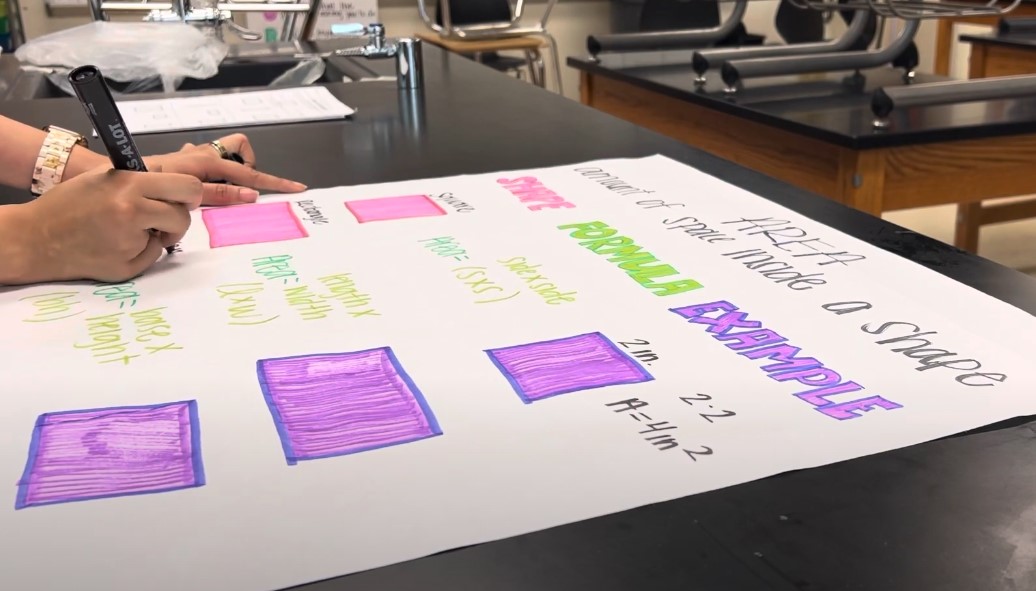
- Anchor charts: Visuals made with the class—“How to Multiply,” “Ways to Compare Fractions.” Post them around the room.
- Worked examples: Walk through a problem slowly, thinking out loud. Then have students try similar problems.
Smart Use of Digital Tools
- Desmos and GeoGebra: Perfect for graphing and dynamic geometry.
- Khan Academy, IXL, or DreamBox: Great for practice tailored to each student’s level.
- Virtual manipulatives: Online versions of base-10 blocks, number lines, and more.
- Gamified learning (like Prodigy or Quizizz): Makes review fun—just make sure it aligns with your goals.
- Collaborative platforms: Google Slides or Jamboard can turn problem-solving into a team activity—even remotely.
Keep It Flexible with Differentiation
No two learners are the same. That’s why a good math plan is flexible and ready to meet kids where they are.
- Small group rotations: Some groups work with you while others do independent or digital tasks.
- Tiered problems: Offer tasks at different challenge levels. For example, everyone solves a basic area problem, then advanced students design their own shape with a set area.
- Choice boards: Let students pick from a menu of activities—some practice, some explore, some apply.
- Scaffolds: Use sentence starters (“I noticed that…”) or visual cues for students who need a boost.
For students needing additional support, consider exploring math tutors near me to provide personalized assistance made for their learning needs.
Don’t Forget the Feedback Loop
Teaching isn’t “set it and forget it.” You need constant feedback—from your students and from your assessments—to know what’s working.
Build in frequent, low-stakes assessments:
- Exit tickets
- Quick quizzes
- Journals or math reflections
- Class discussions
- Peer explanations
Show How Math Matters
View this post on Instagram
You’ll get more buy-in when students see why they’re learning what they’re learning. So build in real-world problems often.
Real-Life Math Ideas by Grade
- K–2: Run a class store or track weather with graphs.
- 3–5: Use recipes to practice fractions. Measure school supplies for perimeter and area.
- 6–8: Explore scale drawings or cell phone plans (perfect for linear equations).
- 9–12: Calculate savings interest, analyze sports stats, model real-world functions.
Let students design projects that solve real problems. That’s where math goes from “just numbers” to “hey, I can actually use this.”
Summary
A strong math plan isn’t just a spreadsheet or calendar. It’s a living document that shifts with your students, their needs, and your own growth as an educator.
So don’t worry if it’s not perfect out of the gate. What matters most is that your plan reflects thoughtful goals, a toolkit of proven strategies, and a real belief that every student can succeed in math—with the right support.
Stay curious. Stay flexible. And trust that with the right plan in place, you’re not just teaching math—you’re helping students build confidence, problem-solving skills, and a foundation for everything that comes next.