

Factors and multiples are basic math ideas that explain how numbers divide into each other and how they grow through multiplication.
A factor is a number that divides evenly into another number, while a multiple is the result of multiplying a number by whole numbers.
Children usually begin formal work with factors and multiples between ages 7 and 9, according to common primary school curricula in Europe, the United States, and Australia.
These concepts matter because they directly support multiplication, division, fractions, and later topics such as ratios, algebra, and problem solving.
What Factors Really Are, Explained Simply
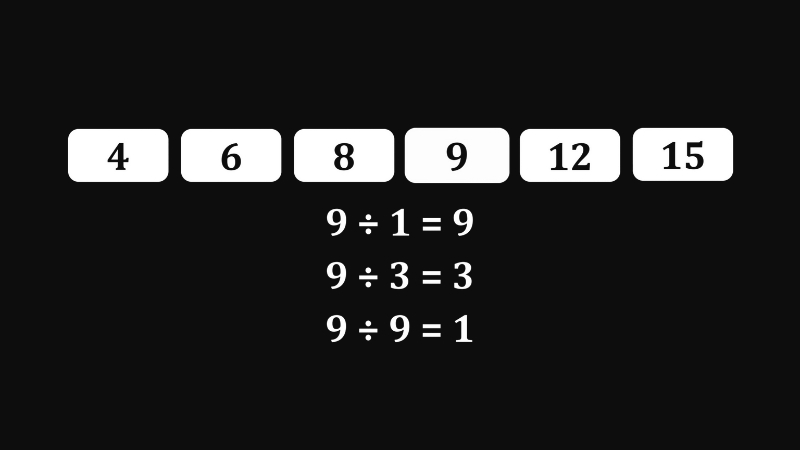
For example, 12 divided by 3 equals 4, so 3 is a factor of 12. The same applies to 1, 2, 4, 6, and 12. These are all factors because they split 12 into equal groups. This idea is not abstract. It is concrete and testable using counters, blocks, or simple division facts.
Children often struggle with factors because they confuse them with multiples. The key difference is direction.
Factors go inward toward a number, while multiples grow outward from a number. Factors answer the question, “What fits exactly into this number?” Once this is clear, mistakes drop sharply.
Educational studies from the UK National Numeracy Strategy show that students who learn factors through division rather than memorization perform better on later fraction tasks.
| Number | Factors |
| 6 | 1, 2, 3, 6 |
| 8 | 1, 2, 4, 8 |
| 10 | 1, 2, 5, 10 |
| 12 | 1, 2, 3, 4, 6, 12 |
This table helps children see that factors always come in pairs. If 3 is a factor of 12, then 4 must be as well. Teaching children to look for pairs reduces guesswork and builds number sense.
What Multiples Are and Why Kids Find Them Easier
Multiples are usually easier for children because they follow the same direction as counting. A multiple is what you get when you multiply a number by 1, 2, 3, and so on. For example, multiples of 5 are 5, 10, 15, 20, 25. This matches skip counting, which most children already practice in early grades.
Research published by the National Council of Teachers of Mathematics shows that skip counting is one of the strongest predictors of multiplication fluency. Because multiples rely on this skill, children tend to grasp them faster than factors.
However, mistakes still happen when children forget that multiples never stop. There is no “last” multiple of a number.
| Number | First 6 Multiples |
| 3 | 3, 6, 9, 12, 15, 18 |
| 4 | 4, 8, 12, 16, 20, 24 |
| 6 | 6, 12, 18, 24, 30, 36 |
| 10 | 10, 20, 30, 40, 50, 60 |
Showing these patterns in tables helps children notice repetition. For example, every second multiple of 3 is also a multiple of 6. These connections matter later when children work with common multiples.
Factors vs Multiples: Side-by-Side Comparison
Children often mix up factors and multiples because the words sound similar. A clear comparison helps prevent confusion. This is especially important in grades 3 and 4, when math vocabulary expands quickly.
| Concept | Factors | Multiples |
| Direction | Divide into a number | Grow from a number |
| Related operation | Division | Multiplication |
| Finite or infinite | Finite | Infinite |
| Example with 8 | 1, 2, 4, 8 | 8, 16, 24, 32 |
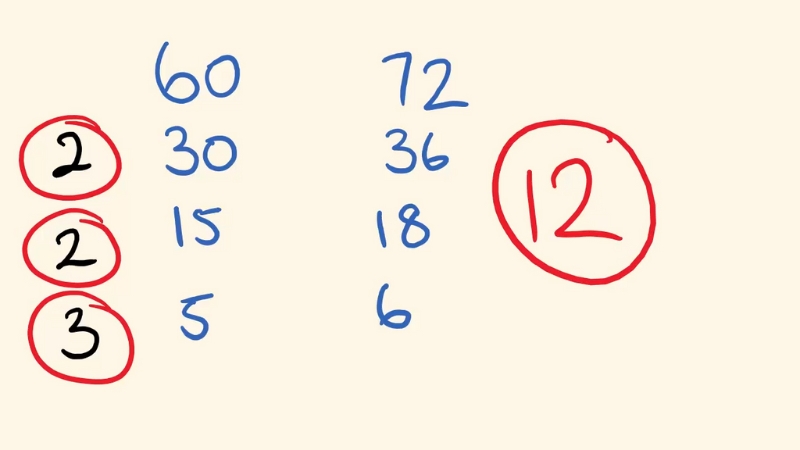
Common Factors and Why They Matter
Understanding this idea prepares children for simplifying fractions, a skill typically introduced around age 9 or 10.
According to data from the OECD’s PISA mathematics framework, students who struggle with fractions often lack early understanding of common factors. Teaching this early reduces later learning gaps.
| Numbers | Common Factors |
| 8 and 12 | 1, 2, 4 |
| 12 and 18 | 1, 2, 3, 6 |
| 15 and 20 | 1, 5 |
Working through examples like these helps children see that common factors are simply overlaps, not a new rule.
Common Multiples and Real Use Cases
View this post on Instagram
Common multiples are numbers that appear in the multiplication lists of two or more numbers. For example, 12 is a common multiple of 3 and 4. This idea shows up in real-life scheduling problems, such as events that repeat every few days.
Education research from Singapore Math programs emphasizes common multiples because they support understanding of the least common multiple (LCM), a concept used in fractions and time-based word problems.
| Numbers | First Common Multiples |
| 2 and 3 | 6, 12, 18 |
| 4 and 6 | 12, 24, 36 |
| 5 and 10 | 10, 20, 30 |
These examples show that common multiples are not random. They come from patterns children already know.
Simple Rules That Actually Work for Kids
Some rules help children identify factors and multiples quickly without memorization overload. Even numbers always have 2 as a factor.
Rules like these reduce cognitive load. A 2019 study in the Journal of Educational Psychology found that students who used number properties instead of rote recall made fewer errors and retained information longer.
Games That Reinforce Understanding Without Guessing

Games work best when they force children to apply rules rather than guess answers. One effective game involves factor finding using number cards.
A child draws a number card and must list all factors within one minute. Another child checks the answers using division. This reinforces accuracy and reasoning.
Multiple games work well with number lines. Children jump forward in equal steps and say the multiples out loud.
This mirrors skip counting but adds visual structure. Classroom observations published by the Education Endowment Foundation show that number-line-based games improve accuracy in multiplication by up to 18 percent over six weeks
| Game Type | Skill Reinforced | Suitable Age |
| Factor hunt | Division accuracy | 7–9 |
| Multiple jumps | Skip counting | 6–8 |
| Common factor match | Comparison | 8–10 |
These games succeed because they require thinking, not speed.
Typical Mistakes and How They Appear
Children often list multiples as factors or stop listing factors too early. For example, they might say that 2, 4, and 6 are factors of 12 and forget 3.
This usually happens because they stop checking once numbers get larger. Teaching factor pairs solves this problem by giving children a clear stopping point.
Another common mistake is thinking that zero is a multiple in the same way as positive numbers.
While mathematically zero is a multiple of any number, most primary curricula exclude it to avoid confusion. Being explicit about this avoids later misunderstandings.
How These Concepts Support Later Math

Factors and multiples are not isolated topics. They support fraction simplification, ratio reasoning, algebraic factoring, and even basic statistics. For example, finding equivalent fractions depends directly on understanding common factors.
This connection is why most national math standards, including Common Core and the UK National Curriculum, require mastery of these topics before age 10.
When children understand why numbers divide and grow the way they do, math stops feeling arbitrary. The rules become consistent and predictable, which is the foundation of mathematical confidence.
Final Perspective
Factors and multiples are not about memorizing lists. They are about understanding how numbers relate to each other through division and multiplication.
When taught with clear rules, visual structure, and deliberate practice through games, children grasp these ideas reliably.
The evidence from curriculum research and classroom studies consistently shows that early clarity in these topics reduces later difficulties in fractions and algebra.