

Elementary Mathematics (E-Math) builds the essential mathematical foundation for everyday problem-solving, further education, and most non-specialist careers.
Additional Mathematics (A-Math) is an advanced extension focused on algebra, trigonometry, and calculus, with an emphasis on concepts needed for science, engineering, economics, and mathematically intensive fields.
The two subjects overlap in fundamentals, but A-Math is more abstract, algebra-heavy, and conceptually demanding, while E-Math emphasizes practical numeracy and broad core competence.
What E-Math And A-Math Actually Represent
Elementary Mathematics typically forms part of lower-secondary or general high-school math education in systems such as Singapore O-Level or similar curricula worldwide. It covers numerical literacy, geometry, statistics, and applied math used in daily life and many professions.
Additional Mathematics is usually optional or elective. It prepares students for advanced mathematics, physics, engineering, finance, computer science, and other quantitative disciplines.
A-Math introduces deeper algebraic manipulation, functions, logarithms, advanced trigonometry, and precalculus concepts.
In practical terms:
| Aspect | Elementary Math (E-Math) | Additional Math (A-Math) |
| Main purpose | Mathematical literacy and general competence | Preparation for advanced STEM study |
| Difficulty level | Moderate | High |
| Focus | Practical math and broad coverage | Abstract algebra and advanced concepts |
| Student profile | All students | Students strong in math or pursuing STEM |
| Future relevance | Daily life, many careers | Engineering, sciences, economics, computing |
E-Math Syllabus Overview
Elementary Mathematics usually emphasizes problem solving, numerical fluency, geometry, and statistics. The content supports both academic progression and real-world applications.
Core E-Math Topics
| Topic Area | What Students Learn | Practical Application |
| Numbers and arithmetic | Fractions, percentages, ratios, indices | Finance, budgeting, commerce |
| Algebra basics | Equations, inequalities, linear graphs | General modeling and problem solving |
| Geometry | Angles, triangles, circles, mensuration | Construction, design, spatial reasoning |
| Statistics | Mean, median, probability basics | Data interpretation, decision making |
| Graphs and functions | Linear and quadratic graphs | Economic and scientific modeling |
| Measurement | Area, volume, units conversion | Engineering basics, everyday measurement |
A strong E-Math foundation supports analytical thinking even outside technical careers. Many employers value numeracy competence for finance, logistics, marketing analysis, and operations.
A-Math Syllabus Overview
Additional Mathematics expands algebraic depth and introduces the mathematical reasoning necessary for higher-level studies.
Core A-Math Topics
| Topic Area | Key Concepts | Importance |
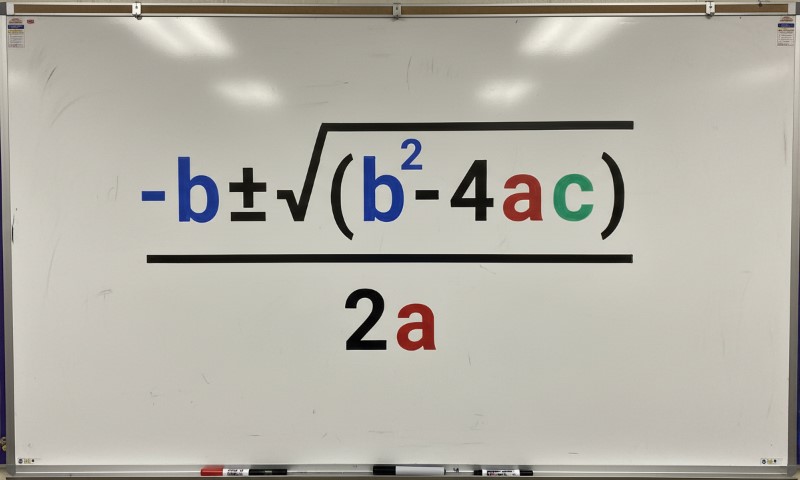
| Advanced algebra | Quadratic functions, polynomials, partial fractions | Foundation for calculus |
| Trigonometry | Identities, equations, radians | Physics, engineering |
| Logarithms and exponentials | Growth models, decay analysis | Finance, science |
| Calculus introduction | Differentiation basics | Rates of change, optimization |
| Functions | Composite, inverse functions | Modeling complex systems |
| Coordinate geometry | Advanced curve analysis | Physics and engineering |
A-Math demands stronger algebraic manipulation skills and conceptual understanding. Mistakes often arise from weak algebra fundamentals rather than new concepts.
Key Differences Between E-Math And A-Math
View this post on Instagram
The differences go beyond difficulty level. They involve thinking style, application scope, and academic direction.
Conceptual Differences
| Feature | E-Math | A-Math |
| Abstraction level | Lower | Higher |
| Real-world application emphasis | Strong | Moderate |
| Algebra complexity | Basic to intermediate | Advanced |
| Geometry coverage | Broad but practical | More theoretical |
| Calculus exposure | Minimal or none | Introductory calculus |
Students often describe E-Math as computational and application-focused, while A-Math requires symbolic manipulation and theoretical reasoning.
Difficulty And Learning Curve
- Heavy algebra dependence
- Multi-step problem solving
- Conceptual abstraction rather than direct calculation
Students strong in E-Math arithmetic but weak in algebra often struggle with A-Math. Conversely, students who enjoy patterns, symbolic manipulation, and logical reasoning tend to excel.
Typical Challenge Comparison
| Skill | E-Math Requirement | A-Math Requirement |
| Algebra manipulation | Moderate | Intensive |
| Problem complexity | Single concept | Multi-concept |
| Memorization | Formulas and methods | Concepts and derivations |
| Visualization | Moderate | High |
How Specialized Support Improves Performance

Around the middle of a student’s learning journey, structured O-Level A Maths tuition often becomes the turning point. At this stage, students usually encounter complex algebra, logarithms, or trigonometric proofs that require guided practice.
With targeted explanation, step-by-step modeling, and exam-focused drills, tuition can convert confusion into mastery much faster than independent study.
- Speed and accuracy under exam conditions
- Confidence with unfamiliar problems
- Long-term retention of mathematical concepts
Students frequently report better performance not just in math but in physics, economics, and computing subjects as well.
Which Students Should Take A-Math
A-Math makes sense for students planning careers involving quantitative reasoning.
- Engineering
- Data science
- Economics and finance
- Computer science
- Architecture
- Physical sciences
Students uncertain about future specialization often still benefit from A-Math because it keeps STEM pathways open.
However, if a student struggles significantly with basic algebra or has no interest in math-heavy fields, focusing on strong E-Math performance may be more practical.
Assessment And Examination Structure

While exact exam formats vary by country, the general pattern remains similar.
E-Math Assessthat ment Focus
| Component | Typical Weight |
| Written calculations | High |
| Applied problem solving | High |
| Data interpretation | Moderate |
| Conceptual explanation | Moderate |
A-Math Assessment Focus
| Component | Typical Weight |
| Algebraic problem solving | Very high |
| Mathematical reasoning | High |
| Multi-step proofs/derivations | Moderate |
| Application modeling | Moderate |
Exams in A-Math usually require more time per question due to complexity.
Benefits Of Studying Both Subjects
- E-Math builds real-world mathematical literacy
- A-Math strengthens abstract reasoning
- Combined study improves analytical thinking
- University readiness improves significantly
Research consistently shows that strong secondary math preparation correlates with better performance in STEM degrees.
Common Misconceptions
“A-Math Is Just Harder Math”
It is structurally different. It emphasizes algebraic thinking rather than numerical computation.
“E-Math Is Not Important If You Take A-Math”
Incorrect. Weak E-Math fundamentals often cause A-Math struggles.
“You Need A-Math Only For Engineering”
Many fields, such as finance, economics, AI, and environmental science, benefit from advanced math.
Study Strategies That Actually Work

For E-Math
| Strategy | Why It Works |
| Practice word problems | Builds real-life application skills |
| Review fundamentals regularly | Prevents calculation errors |
| Use visual diagrams | Improves geometry understanding |
For A-Math
| Strategy | Why It Works |
| Master algebra early | Foundation for most topics |
| Solve progressively harder problems | Builds conceptual flexibility |
| Focus on understanding, not memorizing | Essential for calculus concepts |
Consistency matters more than raw talent in both subjects.
Long-Term Academic And Career Impact

Students with strong mathematics backgrounds often have broader academic options.
- Higher earning potential
- Greater job stability
- Access to emerging industries like AI, fintech, and renewable energy
Mathematics training also strengthens logical thinking, decision-making, and analytical communication.
Final Clarification
Elementary Mathematics develops universal mathematical competence needed for everyday life and most academic pathways.
Additional Mathematics provides advanced conceptual tools required for science, engineering, economics, and other math-intensive disciplines.
Choosing between them depends on academic goals, career direction, and comfort with abstract mathematical reasoning.