
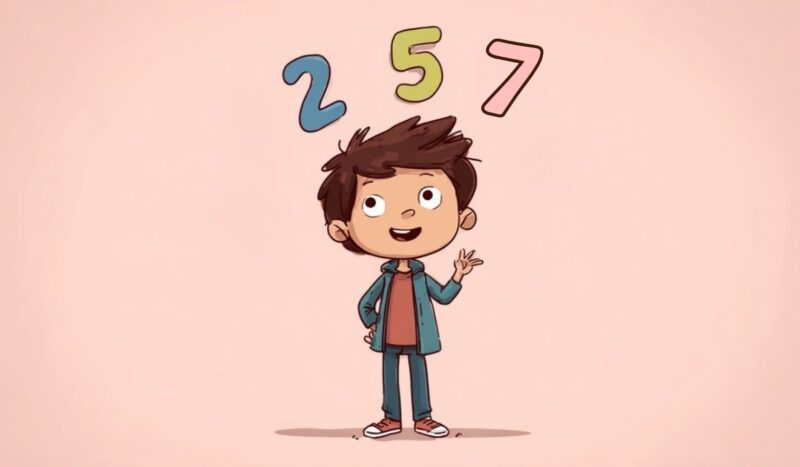
A prime number is a whole number greater than 1 that can be divided evenly by only two numbers: 1 and itself. That is the complete definition.
Numbers like 2, 3, 5, and 7 are prime because no other whole number divides into them without leaving a remainder.
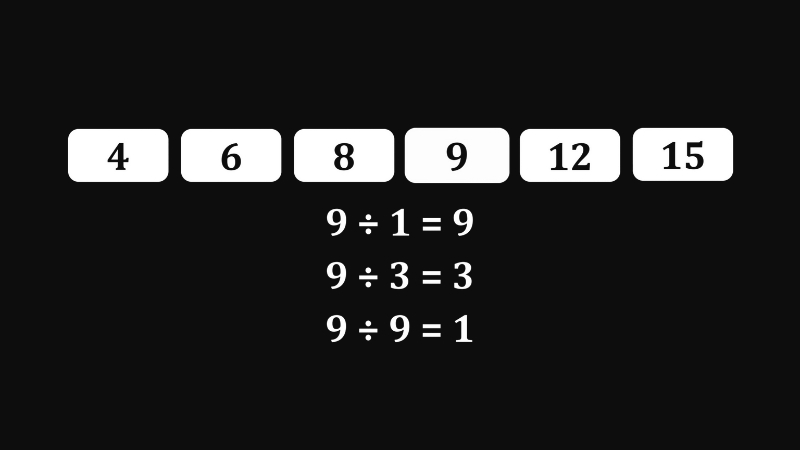
Numbers like 4, 6, 8, or 9 are not prime because they can be divided evenly by more than two numbers.
What “Divided Evenly” Actually Means
When we say a number is divided evenly, we mean the division leaves no remainder. For example, 10 divided by 5 equals 2 exactly, so 10 is divisible by 5. But 10 divided by 3 equals 3 with a remainder of 1, so 10 is not divisible by 3.
This idea is important because it helps kids understand that prime numbers are not about being “small” or “special,” but about how division works. A large number can be prime, and a small number cannot be prime. The rule never changes.
Why the Number 1 Is Not a Prime Number
Many kids ask why 1 is not considered a prime number. The reason is simple and based on the definition. A prime number must have exactly two different divisors.
The number 1 has only one divisor: itself. Because it does not meet the two-divisor rule, mathematicians do not classify it as prime.
This rule was agreed upon in the 18th century to keep math consistent, especially when working with multiplication and factoring. If 1 were considered prime, many math rules used in higher grades would stop working properly.
The Smallest Prime Number and Why It Is Special
The smallest prime number is 2. It is also the only even prime number. Every other even number can be divided evenly by 2, which automatically disqualifies it from being prime. The number 2 can only be divided evenly by 1 and 2, so it qualifies.
This makes 2 unique in the entire number system. All other prime numbers are odd. This fact is often used in math shortcuts and computer algorithms because it allows quick elimination of many numbers when checking for primes.
Prime vs Composite Numbers Explained Clearly
Any whole number greater than 1 falls into one of two categories: prime or composite.
For example, 12 is composite because it can be divided evenly by 1, 2, 3, 4, 6, and 12.
The table below shows the difference clearly.
| Number | Divisors | Prime or Composite |
| 2 | 1, 2 | Prime |
| 3 | 1, 3 | Prime |
| 4 | 1, 2, 4 | Composite |
| 5 | 1, 5 | Prime |
| 6 | 1, 2, 3, 6 | Composite |
| 7 | 1, 7 | Prime |
| 9 | 1, 3, 9 | Composite |
Seeing divisors listed helps kids understand that the classification comes from counting exact divisors, not guessing.
How to Check If a Number Is Prime
To check if a number is prime, start by testing whether it can be divided evenly by any whole number greater than 1 and smaller than itself. If none divide evenly, the number is prime.
For small numbers, this process is quick. For example, to check 11, test division by 2, 3, 4, and 5. None divides evenly, so 11 is prime.
@tutor.e.all.maths Maths tricks 🪄 How can I tell if a number is prime?! Don’t forget to check out tutoreall.com for more private learning classrooms! #maths #gcsemaths #primenumbers #numeracy #ks3maths ♬ original sound – Tutor e all Maths
For larger numbers, mathematicians use shortcuts. One important fact is that you never need to test divisors larger than the square root of the number. This rule is used in schools, science, and computer programming to save time.
Prime Numbers Up to 50
Seeing a list helps patterns become clear. Below is a table of all prime numbers from 1 to 50.
| Range | Prime Numbers |
| 1–10 | 2, 3, 5, 7 |
| 11–20 | 11, 13, 17, 19 |
| 21–30 | 23, 29 |
| 31–40 | 31, 37 |
| 41–50 | 41, 43, 47 |
Notice that prime numbers become less frequent as numbers get larger. This is a well-known mathematical fact studied since ancient Greece and proven more formally in the 19th century.
Common Mistakes Kids Make With Prime Numbers

Another mistake is forgetting to test division carefully and stopping too early. Proper checking always matters.
Understanding these mistakes early helps prevent confusion in later math topics such as fractions, algebra, and number theory.
Mini Quiz: Test Your Knowledge
Try answering these questions before checking the answers.
| Question | Your Answer |
| Is 1 a prime number? | |
| Is 2 prime or composite? | |
| Is 15 a prime number? | |
| Which is prime: 21 or 23? | |
| How many divisors does a prime number have? |
Bottom Line
Prime numbers are defined by a clear rule: exactly two divisors, 1 and the number itself. This rule has stayed the same for centuries because it works.
By learning how to test numbers carefully, understanding why 1 is excluded, and seeing real examples, kids gain a solid foundation that supports many future math topics.