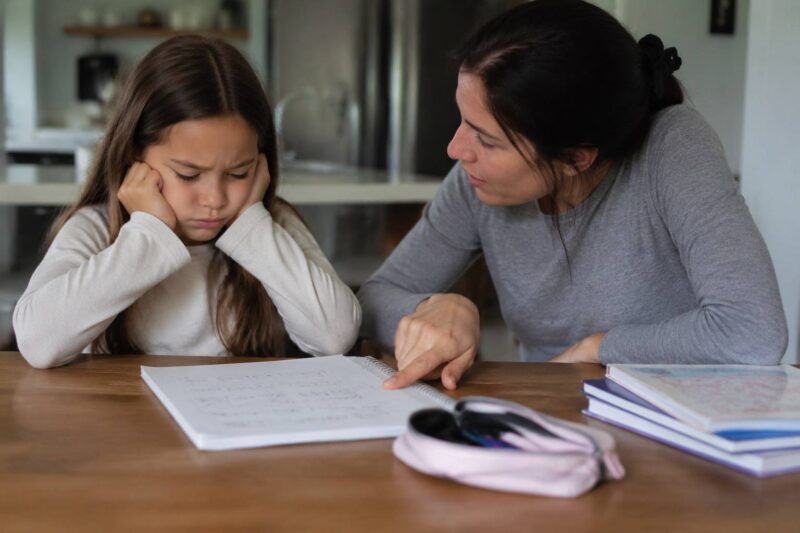


Over the past decade, parents, teachers, pediatricians, and even students themselves have pushed back against the assumption that more homework automatically means better education.
At the same time, many educators argue that homework still plays an important role in building discipline, independence, and long-term memory. The growing tension between these two views has created one of the most intense education debates of the last 20 years.
How Homework Became a Standard in Schools
Homework did not always exist in the way we know it today. In the early 1900s, many school systems in the United States actively banned homework for younger children because it was seen as harmful to physical health.
Children were expected to work on farms, help at home, and play outdoors after school, not continue academic labor into the evening.
After World War II, homework became tied to national competitiveness, especially during the Cold War space race. More homework was seen as a way to create stronger scientists and engineers.
By the 1980s and 1990s, nightly homework across all grade levels became normalized in most Western education systems. By the 2000s, students in some countries were spending two to four hours per night on assignments by middle school.
What started as a tool for academic reinforcement slowly turned into a default routine, rarely questioned until the mental health crisis among students became impossible to ignore.
Read more: Find out how AI tools are changing math education for the better!
What the Research Really Says About Homework and Learning

The strongest large-scale research on homework comes from meta-analyses that compare homework time with academic performance across thousands of students.
For Elementary School Students
For children under age 11, the data is clear: Homework has little to no measurable academic benefit.
- No meaningful improvement in test scores
- No reliable increase in reading or math mastery
- Increased stress, fatigue, and family conflict
The human cost appears long before any academic benefit. Children in early grades already spend 6 to 7 hours per day in structured learning. Adding another hour at home often leads to burnout rather than skill growth.
For Middle School Students
Middle school is where the effect becomes mixed.
- The assignments are short and specific
- Feedback is provided quickly
- The work directly connects to class instruction
Once homework exceeds about 60 to 90 minutes per night, benefits flatten while stress sharply increases.
For High School Students
High school students are the only group where homework shows consistent academic correlation, especially in advanced courses.
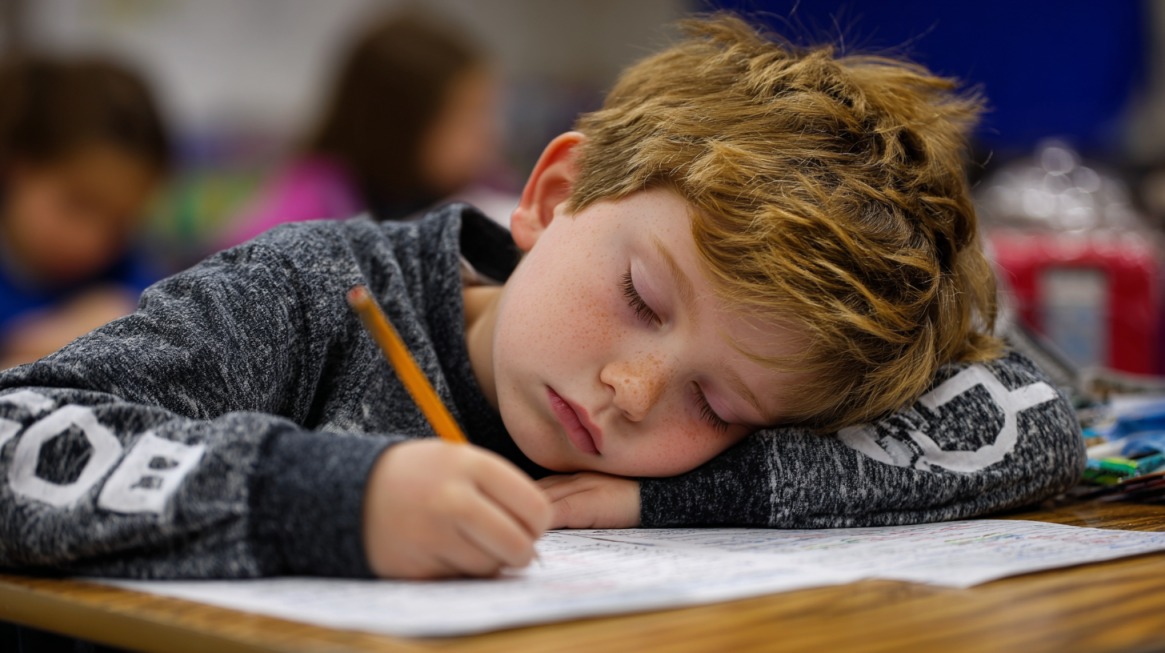
Even here, the benefit plateaus at around two hours per night. Beyond that point, grades and retention stop improving while anxiety, sleep deprivation, and disengagement rise.
The Psychological Cost of Heavy Homework Loads

Academic performance is only one side of the equation. The other side is mental health, which has now become impossible to separate from school policy.
- Chronic sleep deprivation
- Elevated anxiety and depression rates
- Increased irritability and emotional exhaustion
- Reduced intrinsic motivation for learning
Teenagers today sleep one to two hours less per night than teens did 40 years ago. Homework is a primary driver of that deficit. Sleep loss alone is associated with lower memory formation, weaker emotional regulation, and impaired attention.
Younger children experience the same stress differently.
- Stomach aches
- Headaches
- Avoidance behavior
- Emotional meltdowns during homework time
For many families, homework becomes the main source of nightly conflict rather than a learning experience.
What Teachers See Inside the Classroom

Teachers are often caught in the middle of this debate.
- Curriculum pacing requirements
- Standardized testing pressure
- Lack of classroom time for full mastery
- Administrative expectations
In practice, teachers report three consistent patterns:
First, a large portion of homework is completed with parent assistance, not independent student work. This makes homework a poor measure of true student understanding.
Second, students with stable home environments, quiet study spaces, and parental support benefit more, while students without those advantages fall further behind. Homework often widens achievement gaps instead of closing them.
Third, teachers report that homework is increasingly completed with outside tools, copied from peers, or generated by apps. The rise of digital shortcuts has weakened homework as an honest learning diagnostic.
This is where tools such as a paraphrasing tool often enter the homework ecosystem. Students use them to reword content quickly when facing time pressure. While such tools can support learning when used ethically, they also highlight how homework is shifting from skill practice to task completion.
The Family Perspective: Homework Inside the Home
For parents, the homework debate is rarely philosophical. It is emotional and personal.
- Lost family dinner time
- Children crying over assignments late at night
- Weekends are consumed by unfinished work
- Conflict between siblings over shared space and attention
In households where both parents work, homework often extends the school day into the late evening. In lower-income families, where parents may work multiple jobs, children are expected to complete homework alone without support, further deepening inequality.
Some parents defend homework because it allows them to see what their children are learning. Others say it destroys the few peaceful hours they have together each day.
Countries That Have Reduced Homework and What Happened
Several education systems that consistently rank high on international assessments take a very different approach to homework.
Finland
Finland assigns minimal homework, especially in primary education. School days are shorter. Students receive extensive in-class support. Despite this, Finnish students consistently perform near the top in reading, math, and science.
South Korea
South Korea historically had extremely heavy homework and private tutoring loads. In recent years, the government imposed limits on after-school study hours due to widespread teen burnout and suicide risk. Academic performance remained strong even as homework time dropped.
Netherlands
Dutch primary schools assign very light homework and focus heavily on class-time mastery. Student satisfaction and well-being scores remain among the highest in Europe.
The pattern across these countries is consistent: quality of instruction matters more than quantity of homework.
What Schools Are Starting to Do Differently
The most progressive school systems are not choosing extremes. They are redesigning homework rather than eliminating it outright.
- No homework for grades K–3
- Maximum time limits by grade
- Homework-free weekends
- Project-based assignments instead of worksheets
- Built-in homework support periods during the school day
Some districts now formally follow the “10-minute rule”:
- Grade 1: 10 minutes
- Grade 2: 20 minutes
- Grade 3: 30 minutes
- And so on
Even that model is now under reconsideration due to mental health concerns.

Does Eliminating Homework Hurt College Readiness?
This is one of the biggest fears among parents of older students. Many worry that reducing homework will leave teenagers unprepared for college or professional workloads.
- Self-regulation
- Time management
- Reading comprehension
- Mental resilience
Then with sheer homework volume during high school. Students who arrive burned out often struggle more than those who maintain balanced routines.
Colleges themselves are increasingly reducing nightly workload expectations in recognition of cognitive overload.
So Should Schools Stop Giving Homework?
- Elementary schools should eliminate routine daily homework.
- Middle schools should assign only brief, targeted reinforcement.
- High schools should limit homework to skill-based, feedback-driven work that directly supports mastery.
Homework should no longer function as:
- A punishment
- A control mechanism
- A time-filling exercise
- A substitute for classroom instruction
It should serve one purpose only: to strengthen learning that already happened during the school day.
Fact: Homework can be less stressful and more fun if school start giving them through projects and games!
Final Reality Check
The homework debate is no longer ideological. It is physiological, psychological, and developmental.
- Damages sleep
- Increases anxiety
- Weakens motivation
- Worsens inequality
- Erodes family stability
Limited, well-designed homework:
- Can reinforce learning
- Supports independence in older students
- Helps identify learning gaps
Schools will not improve outcomes by simply assigning more work. They improve outcomes by respecting how the human brain actually learns, rests, and develops.
The future of homework is not elimination or overload. It is precision.