


Scoring high on the SAT Math section isn’t just about being good at math — it’s about being smart with how you prepare. The math section is worth up to 800 points, making up half of your total SAT score. That’s a lot riding on those numbers.
And now that the SAT has gone fully digital, things feel different. You’ve got 44 math questions, 70 minutes, and a calculator for all of them — but also, the test adapts to how well you do. Get the first part right? The second part gets harder. Struggle early? You might get stuck in a lower score bracket.
So, how do you get ahead without feeling overwhelmed?
Let’s talk about 10 strategies that actually move the needle — the kind of real-world, practical stuff that works.
1. Know How the SAT Math Section Is Structured
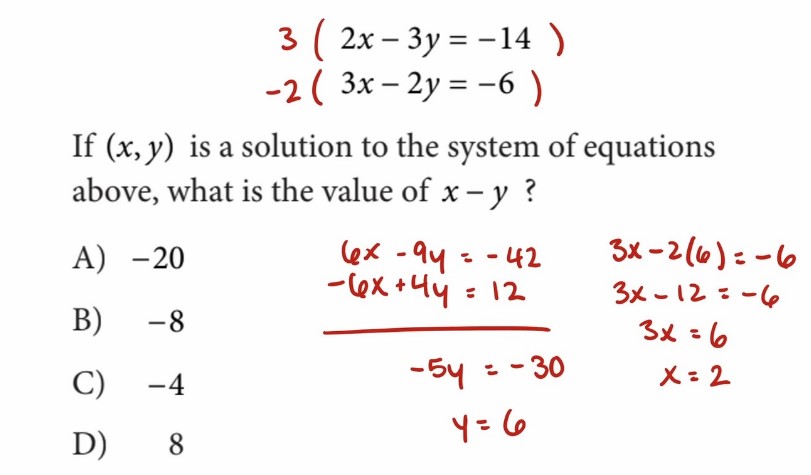
Before anything else, get familiar with what you’re walking into. The math section breaks down into four key areas:
| Category | Topics Covered | Approx. Questions |
| Algebra | Linear equations, inequalities, systems | 13–15 |
| Advanced Math | Quadratics, exponentials, polynomials | 13–15 |
| Problem-Solving & Data | Ratios, percentages, statistics | 5–7 |
| Geometry & Trigonometry | Triangles, circles, trig ratios | 5–7 |
You’ll face two math modules — the second one depends on how well you did on the first. That’s the adaptive part. Nail the first half, and you’ll face tougher (but higher-scoring) questions in round two.
Pro tip: Use the College Board’s free Bluebook app. It mirrors the actual digital test and lets you get used to the new format, including the on-screen calculator.
2. Always Answer Every Question (Even If You’re Guessing)
There’s no penalty for wrong answers, so leave nothing blank. Seriously — you miss 100% of the shots you don’t take, and you’ve got a 1-in-5 chance just by guessing. Eliminate even one option? Your odds jump to 1-in-4 or better.
- Example: A question asks for an angle measure in a triangle, and three options are over 180°. Ditch those, guess between the remaining two. Better shot at landing the point.
3. Skip the Hard Ones (and Come Back)

Every question is worth the same — one point. So why waste five minutes on a brain-melter when five easier points are still on the table?
If you hit a wall, skip it, flag it, and circle back once you’ve cleared the easier stuff. It’s a time-management game.
- Example: Struggling with a quadratic that just won’t factor? Flag it and go tackle the next one about percent change or simple ratios.
If you’re unsure about guessing strategies or need more practice, a math tutor NYC can provide targeted exercises to build your confidence.
4. Don’t Fear Estimation — It Can Save Time
You don’t always need to calculate something to the decimal. Sometimes, close enough is good enough — especially with multiple-choice.
- Example: You’re asked to find the area of a rectangle: 5.2 × 3.8. Just round to 5 × 4 = 20. Look for answer choices around 20 and narrow it down.
This trick is gold for weird fractions, percentages, or when answers vary wildly in scale.
5. Word Problems? Turn Them into Equations

A lot of students freeze when they see a word problem — but most are just simple equations hiding behind fancy language. Look for keywords:
- “Sum” or “total” = add
- “Difference” = subtract
- “Product” = multiply
- “Quotient” = divide
Example
The sum of two numbers is 15, and their difference is 3.
Turn that into:
x + y = 15
x – y = 3
Add both equations → 2x = 18 → x = 9, y = 6.
It’s just algebra in disguise.
6. Practice With a Timer
You’ve got about 95 seconds per question. That’s not a lot — especially when the pressure’s on. If you don’t build a sense of pacing now, you might panic later.
Start doing full timed sections at least once a week. It helps train your brain to move at test speed.
Example Plan
- First 22 questions → done in 35 minutes
- Leave 35 minutes for tougher module 2
- Keep 5 minutes at the end for review or flagged questions
7. Work Backwards from the Answers
Backsolving is underrated. For algebra questions especially, try plugging in answer choices instead of solving from scratch.
Example
Solve 2x + 3 = 11.
Try C) x = 4:
2(4) + 3 = 8 + 3 = 11 → Boom. Done.
Why burn time on algebra when the test handed you possible answers?
8. Memorize the Must-Know Formulas
The SAT gives you some formulas at the start of the section, but not all. And digging through that reference sheet wastes precious seconds. Burn the key ones into your brain:
| Formula | Use |
| x=−b±b2−4ac2ax = \frac{-b \pm \sqrt{b^2 – 4ac}}{2a}x=2a−b±b2−4ac | Quadratic formula |
| m=y2−y1x2−x1m = \frac{y_2 – y_1}{x_2 – x_1}m=x2−x1y2−y1 | Slope |
| A=12×base×heightA = \frac{1}{2} \times \text{base} \times \text{height}A=21×base×height | Triangle area |
| a2+b2=c2a^2 + b^2 = c^2a2+b2=c2 | Pythagorean theorem |
| Circumference = 2πr2\pi r2πr, Area = πr2\pi r^2πr2 | Circle formulas |
| SOHCAHTOA | Trig ratios |
9. Use Your Calculator… But Not for Everything
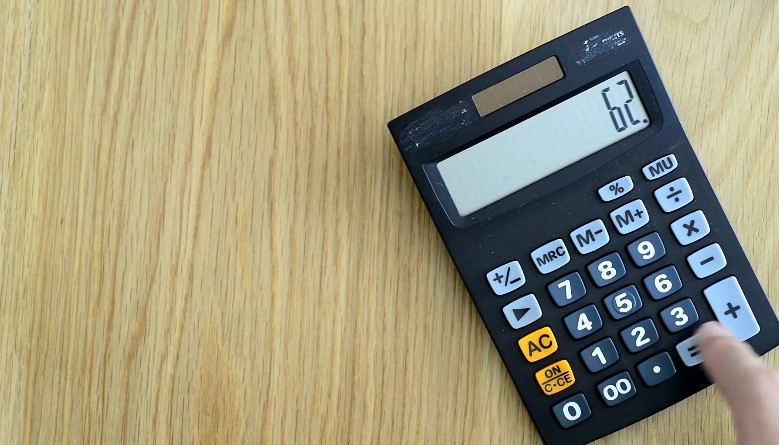
Yes, you get a calculator. But overusing it can slow you down. Mental math works faster for a lot of smaller calculations.
Example
15% of 80?
10% = 8, 5% = 4 → Total = 12. No calculator needed.
Save the calculator for tougher stuff:
- Solving quadratics
- Long decimals
- Statistics from graphs
Also, get comfy with the on-screen calculator in the Bluebook app — it’s a bit different from your handheld.
10. Build a Steady Study Routine
Consistency beats cramming. Studying a little each week helps build real skills — not just short-term memory.
Simple Schedule Example
| Week | Focus Area |
| 1 | Algebra basics + practice problems |
| 2 | Quadratics and polynomials |
| 3 | Data analysis and word problems |
| 4 | Geometry and trig |
| 5 | Mixed timed practice tests |
Review every mistake — don’t just note the right answer. Figure out why you missed it, and how you’ll avoid the same trap next time.
Key Strategies by Category
View this post on Instagram
Here’s a tighter breakdown of topic-based strategies — pulled from reliable prep sources like GeeksforGeeks:
| Math Category | What It Covers | Winning Moves |
| Algebra | Linear equations, inequalities, systems | Solve for one variable, then plug in; flip the inequality if multiplying/dividing by a negative |
| Advanced Math | Quadratics, exponentials, polynomials | Factor first; use the quadratic formula when factoring fails; know what exponential growth looks like |
| Data Analysis | Ratios, percentages, mean/median, probability | Convert to fractions; use probability = favorable/total; know how to read charts and tables |
| Geometry/Trig | Triangles, circles, SOHCAHTOA | Pythagorean Theorem, circle formulas, basic trig ratios help when angles show up |
Quick Prob. Example (Data)
A bag has 3 red, 4 blue, and 5 green marbles.
What’s the probability of picking red or green?
- Total = 12
- Favorable = 3 (red) + 5 (green) = 8
- Probability = 8/12 = 2/3
Adapting to the New Digital SAT

Some test-day changes are worth noting:
- It’s Shorter — now 2 hours and 14 minutes (down from 3+ hours)
- It’s Adaptive — the second module adjusts based on how you do in the first
- Calculator Allowed Everywhere — and there’s one built into the test platform
What to Do
- Practice with the Bluebook app so you’re used to the tools
- Be sharp in module 1 — it shapes your scoring ceiling
- Know how to flag questions to return to them efficiently
Bonus Moves to Keep in Mind
Let’s wrap with a few under-the-radar tips:
- Mental math warm-ups before practice sessions boost speed
- Watch for trap answers — like flipping signs or misreading units
- Stick to legit study tools — not all practice tests are created equal. Official College Board materials are your safest bet.
You’ve Got More Control Than You Think
SAT Math isn’t about being born a “math person.” It’s about building a toolkit — formulas, timing tricks, mental shortcuts, and a calm head on test day.
So keep showing up. Practice with intention. And don’t let a few tough problems shake your confidence — even top scorers skip questions.
You’re not aiming for perfection. You’re aiming to score higher than you did yesterday — and with the right prep, you will.